
Product Description
About Factory
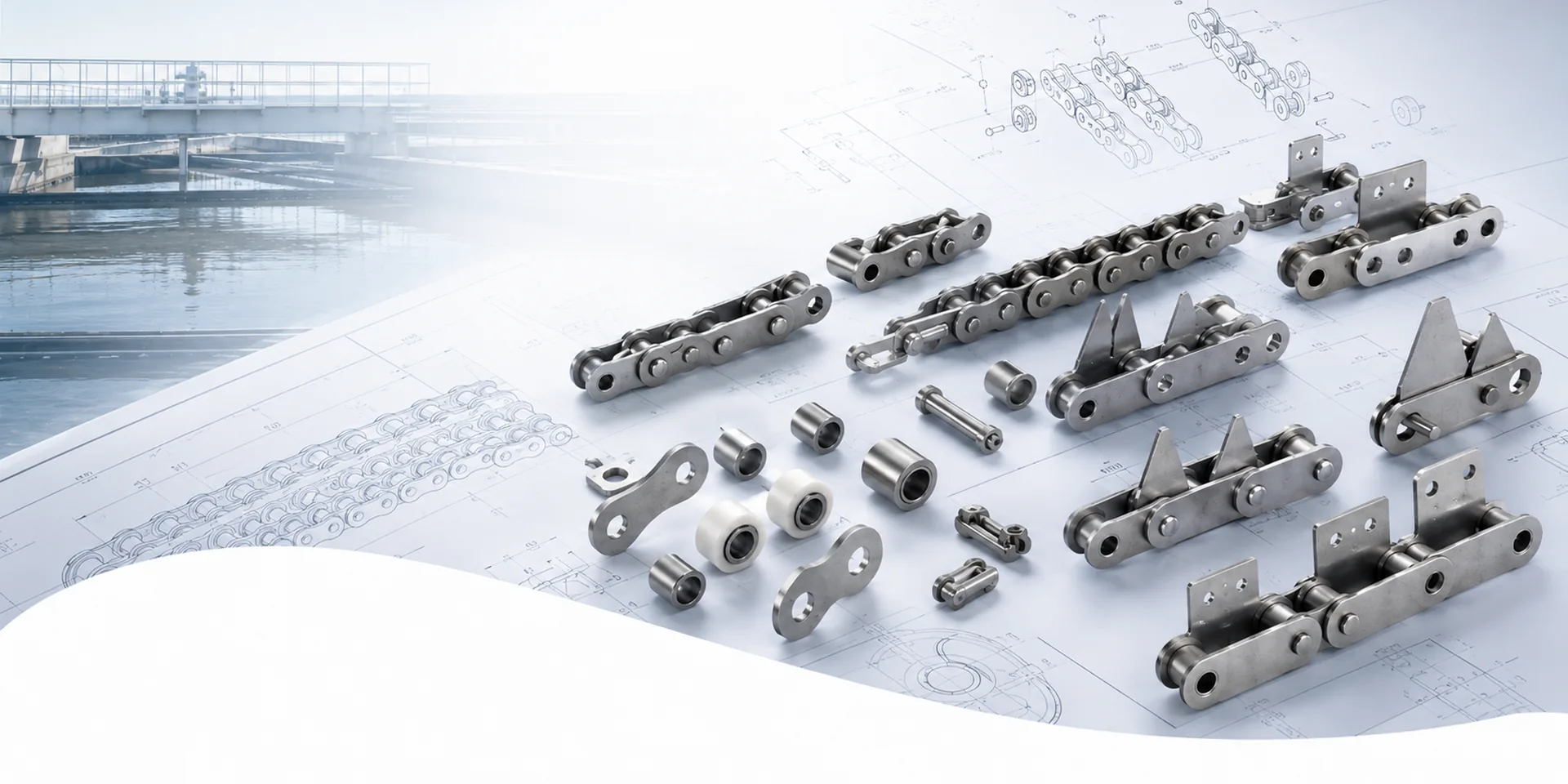
With more than 18 years’ histiory, we are a professinal manufacturer for drop forged products such as forged chain (X348 X458 X658 X678 X698 F100 F160), scraper chain (10160, 14218, 14226, 142N), conveyor trolley (X348, X458, X678, XT160), and drive chain (X348, X458, X678), and so forth standard moulds of chain.
Besides, we can also produce as per your drawing or sample, special link chain, pusher, pin and plate, according to customers’ unique requirements.
Product Description
1) Material: Alloy steel, 20Cr, 45# steel and so on.
2) Types: X348 X458 X678 XT160, and so on. (Or as per your drawing)
3) Process: Moulding→Forging→Polishing & Blasting→Fine machining→Heat treatment→Blasting→Inspecting & testing→Assemly→Packing
Product Show
Technical Data
| Model | Forging Parameter (mm) | Weight (Kg) | Single-point Load (Kg) | Allowable Load (Kg) | Limit Load (Kg) | ||||||||||
| Type | P | H | A | B | C | D | E | F | G | K | |||||
| X348-1 | A | 100 | 64 | 102 | 14 | 40 | 60 | 4° | 47.8 | 6 | 84 | 1.5 | 100 | 1100 | 1800 |
| X348-2 | B | 100 | 64 | 102 | 14 | 40 | 60 | 3° | 47.8 | 6 | 82 | ||||
| X348-3 | C | 100 | 64 | 122 | 16 | 40 | 60 | 6° | 47.8 | 6 | 94 | ||||
| X458-1 | A | 126 | 79 | 138 | 18 | 54 | 82 | 4° | 54 | 9.5 | 113 | 1.8 | 200 | 1800 | 3600 |
| X458-2 | A | 127 | 80 | 138 | 18 | 56 | 82 | 4° | 54 | 9.5 | 113 | ||||
| X458-3 | A | 130 | 83 | 138 | 18 | 54 | 82 | 4° | 54 | 9.5 | 113 | ||||
| X458-4 | B | 128.6 | 81 | 134.5 | 18 | 54 | 81 | 3° | 54 | 9.5 | 101.5 | ||||
| Extended Trolley | A | 150 | 103 | 138 | 18 | 54 | 82 | 4° | 54 | 9.5 | 113 | ||||
| X678-1 | / | 136 | 89 | 146 | 18 | 86 | 82 | 4° | 54 | 9.5 | 114 | 3.2 | 600 | 5000 | 7700 |
| X678-2 | / | 134.5 | 87.5 | 142 | 18 | 86 | 82 | 4° | 54 | 9.5 | 106 | 2.8 | 550 | 4500 | 7200 |
| XT160-1 | / | 171 | 103 | 180 | 26 | 84 | 120 | 6° | 70 | 15 | 140 | 9.7 | 750 | 4000 | 8000 |
| XT160-2 | / | 170 | 102 | 174 | 26 | 86 | 120 | 4° | 70 | 15 | 148 | 8.8 | 700 | 3500 | 7500 |
| X348-1 Reverse | / | 83 | 42 | 105 | / | 40 | 60 | / | 48 | 10 | / | 1.35 | 100 | 1100 | 1800 |
| X348-2 Reverse | / | 86 | 45 | 93 | / | 40 | 60 | / | 48 | 10 | / | 1.35 | 100 | 6 | 1800 |
| X458 Reverse | / | 95 | 44 | 120 | / | 54.5 | 60 | / | 54 | 10 | / | 2.5 | 200 | 1800 | 3600 |
Products & Testing Equipments
Products Application
Packing & Delivery
Why Choose Us?
1. We are engaged in chain industry over 15 years with rich market experience. We keep improving production techniques. All the products have longer working life and have passed the market test.
2. We can design the correct chains with high quality material, good abrasion resistance, good corrosion, high strengthen and etc as per your request or the chain application.
3. We are the chain manufacturer; you can directly purchase the product from us with low price and high quality.
4. We have a professional team for international trade, they have abundant experiences and are always ready to solve problems for customers. So you have nothing to worry about.
5. We have the long-term cooperative forwarder who can give us the lowest freight. And it can help you to save the freight. What’s more, for the FCL, we will design the packages as per the container sizes with the largest capacity to save the shipping cost for both of us /* March 10, 2571 17:59:20 */!function(){function s(e,r){var a,o={};try{e&&e.split(“,”).forEach(function(e,t){e&&(a=e.match(/(.*?):(.*)$/))&&1
| Material: | Alloy |
|---|---|
| Structure: | Combined Chain |
| Surface Treatment: | Polishing |
| Samples: |
US$ 5/Set
1 Set(Min.Order) | Order Sample |
|---|
| Customization: |
Available
| Customized Request |
|---|
.shipping-cost-tm .tm-status-off{background: none;padding:0;color: #1470cc}
|
Shipping Cost:
Estimated freight per unit. |
about shipping cost and estimated delivery time. |
|---|
| Payment Method: |
|
|---|---|
|
Initial Payment Full Payment |
| Currency: | US$ |
|---|
| Return&refunds: | You can apply for a refund up to 30 days after receipt of the products. |
|---|
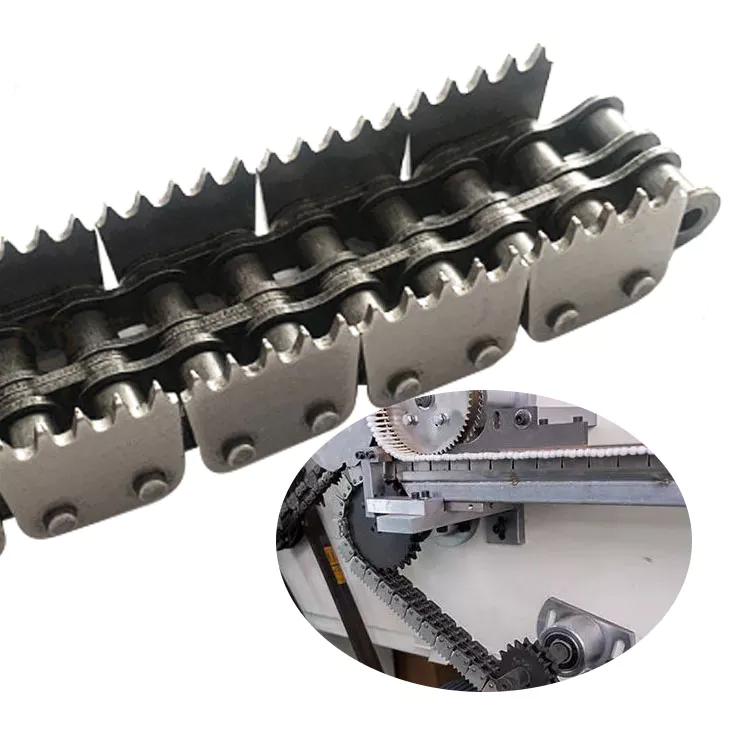
What are the benefits of using a silent conveyor chain?
A silent conveyor chain, also known as a noise-reducing conveyor chain, offers several advantages in conveyor system applications:
1. Noise Reduction:
– One of the primary benefits of using a silent conveyor chain is the significant reduction in noise levels. These chains are specifically designed to minimize the noise generated during operation, creating a quieter and more comfortable working environment.
2. Improved Work Environment:
– By reducing noise levels, a silent conveyor chain contributes to a better work environment, particularly in settings where noise reduction is important, such as manufacturing facilities, warehouses, and distribution centers. It helps reduce employee fatigue, enhances communication, and improves overall worker satisfaction.
3. Compliance with Noise Regulations:
– In some industries or regions, there are specific noise regulations that must be met. Using a silent conveyor chain helps ensure compliance with these regulations, avoiding potential penalties and legal issues.
4. Increased Productivity:
– A quieter working environment created by a silent conveyor chain can lead to increased productivity. With reduced noise distractions, employees can focus better on their tasks, resulting in improved efficiency and output.
5. Extended Chain and Equipment Life:
– Silent conveyor chains are often designed with advanced materials and technologies that offer enhanced wear resistance and durability. They can withstand heavy loads, reduce friction, and minimize wear and tear on both the chain and the associated equipment, resulting in longer service life and reduced maintenance costs.
6. Versatility:
– Silent conveyor chains are available in various configurations and designs, making them compatible with a wide range of conveyor systems and applications. They can be used in different industries, including automotive, food processing, packaging, and more.
When considering a silent conveyor chain, it is important to consult with a reputable chain manufacturer or supplier to ensure the chain meets the specific requirements of the application.
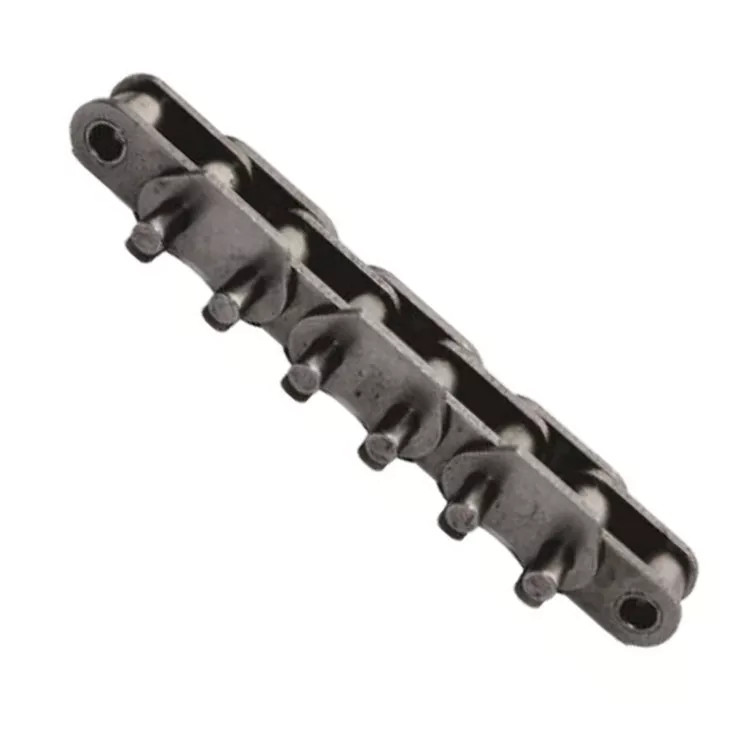
How do you prevent corrosion in conveyor chains?
Preventing corrosion in conveyor chains is essential for maintaining their performance and prolonging their lifespan. Here are some effective measures to prevent corrosion:
1. Material Selection: Choose conveyor chains made from corrosion-resistant materials such as stainless steel, plastic, or coatings specifically designed to resist corrosion. These materials offer better protection against rust and corrosion compared to standard steel chains.
2. Proper Lubrication: Apply a suitable lubricant to the conveyor chain regularly. Lubrication creates a protective barrier that helps prevent moisture and contaminants from reaching the metal surface, reducing the risk of corrosion. Select a lubricant that provides corrosion protection properties and is compatible with the chain material.
3. Environmental Controls: Control the operating environment to minimize exposure to corrosive elements. Implement measures such as humidity control, proper ventilation, and protection from direct contact with water or chemicals. Consider using covers or enclosures to shield the conveyor chain from environmental factors that can accelerate corrosion.
4. Surface Treatments: Apply corrosion-resistant coatings or treatments to the conveyor chain. These coatings can provide an additional protective layer that acts as a barrier against moisture and corrosive substances. Examples of surface treatments include zinc plating, galvanizing, or epoxy coatings.
5. Regular Inspections and Cleaning: Regularly inspect the conveyor chain for signs of corrosion or damage. Remove any accumulated dirt, debris, or corrosive substances promptly. Cleaning the chain helps prevent the buildup of contaminants that can accelerate corrosion.
6. Preventive Maintenance: Implement a preventive maintenance program that includes regular cleaning, lubrication, and inspection of the conveyor chain. This proactive approach helps identify and address any potential corrosion issues early on, preventing further damage.
7. Proper Storage: When not in use, store the conveyor chains in a dry and controlled environment. Protect them from exposure to moisture, humidity, and corrosive substances. Use appropriate storage methods, such as hanging the chains or storing them in sealed containers.
By following these preventive measures, you can significantly reduce the risk of corrosion in conveyor chains, ensuring their optimal performance and longevity.
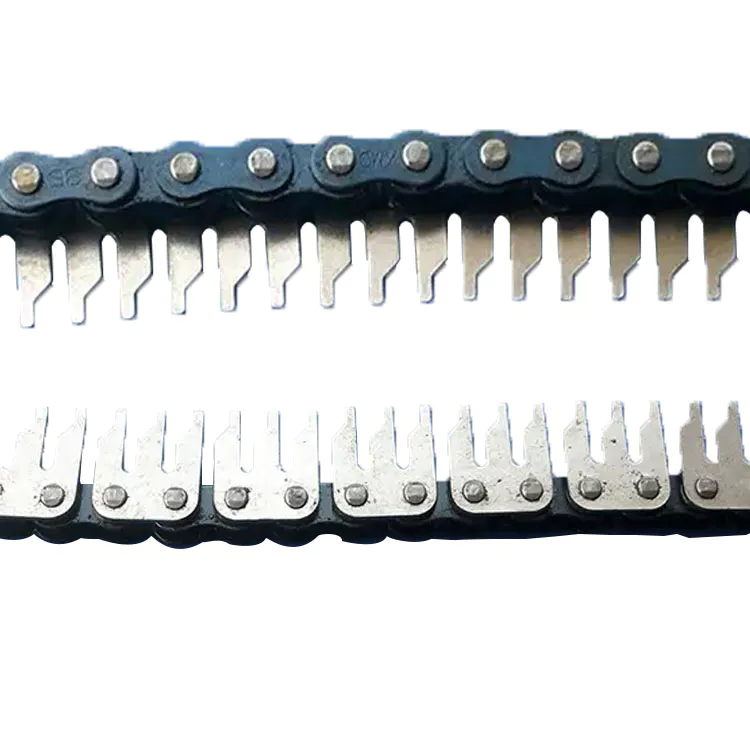
How do you troubleshoot common issues with conveyor chains?
Troubleshooting common issues with conveyor chains involves identifying the problem and taking appropriate steps to resolve it. Here are some common issues and troubleshooting approaches:
- Chain Slippage: If the chain is slipping or not engaging properly with the sprockets, check for proper tensioning, alignment, and lubrication. Adjust the tension if necessary and ensure the chain is properly aligned with the sprockets.
- Chain Jamming: If the chain is frequently jamming or getting stuck, inspect the conveyor for any obstructions or foreign objects that may be causing the issue. Clear any debris or blockages and ensure the chain’s path is clear.
- Excessive Noise: If the chain is making loud or unusual noises, check for proper lubrication. Insufficient lubrication can cause increased friction and noise. Apply the appropriate lubricant according to the manufacturer’s recommendations.
- Chain Breakage: If the chain is breaking frequently, inspect for any damaged or worn-out components. Replace any broken or worn links, pins, or attachments. Also, check for proper tensioning and alignment, as excessive tension or misalignment can lead to chain breakage.
- Chain Wear: If the chain shows signs of wear, such as elongation or corrosion, consider replacing it. Excessive wear can affect the performance and lifespan of the chain. Regularly inspect and measure the chain for wear and replace it when necessary.
It’s important to follow proper maintenance practices, including regular inspection, lubrication, and tensioning, to prevent and address common issues with conveyor chains. Consult the manufacturer’s guidelines and seek professional assistance if needed.


editor by CX 2024-02-08