
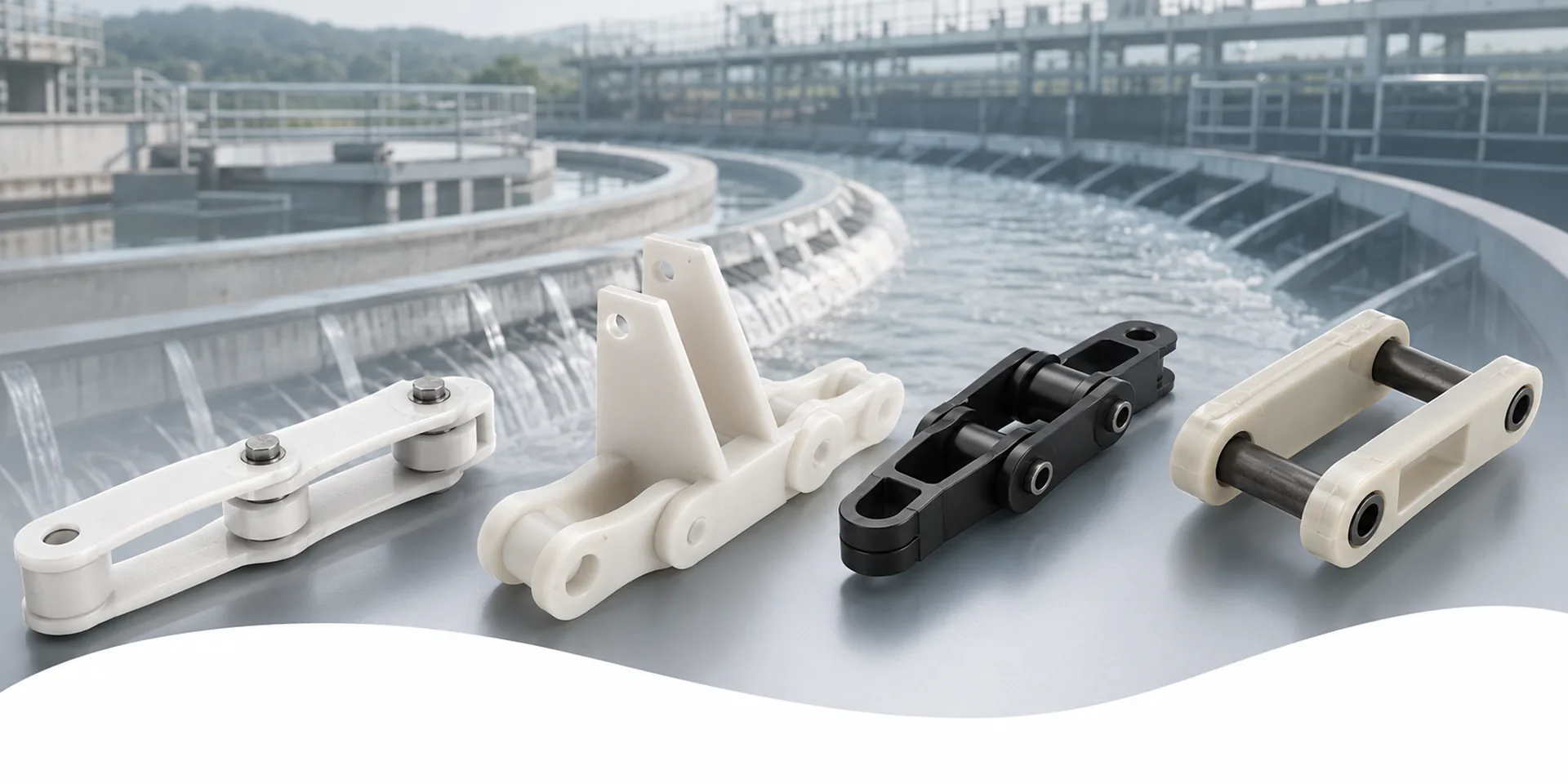
Available product pages
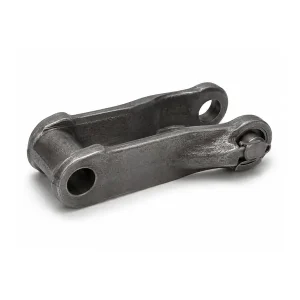
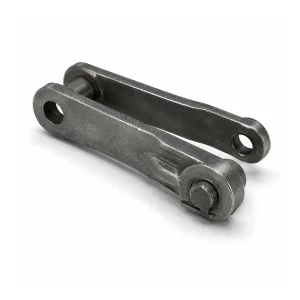
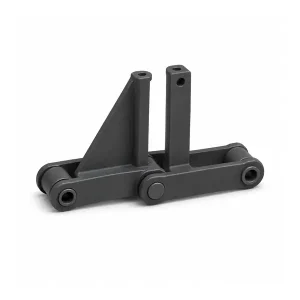
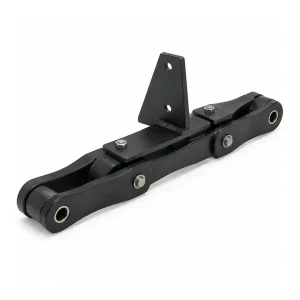
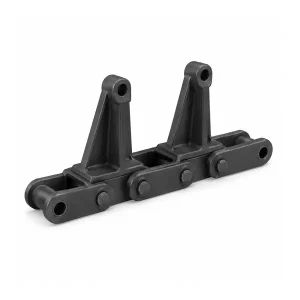
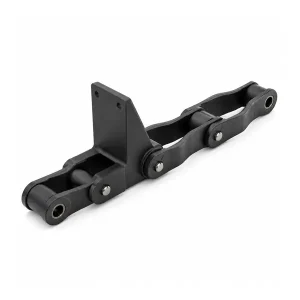
Choose wastewater collector & pintle chains from the machine interface
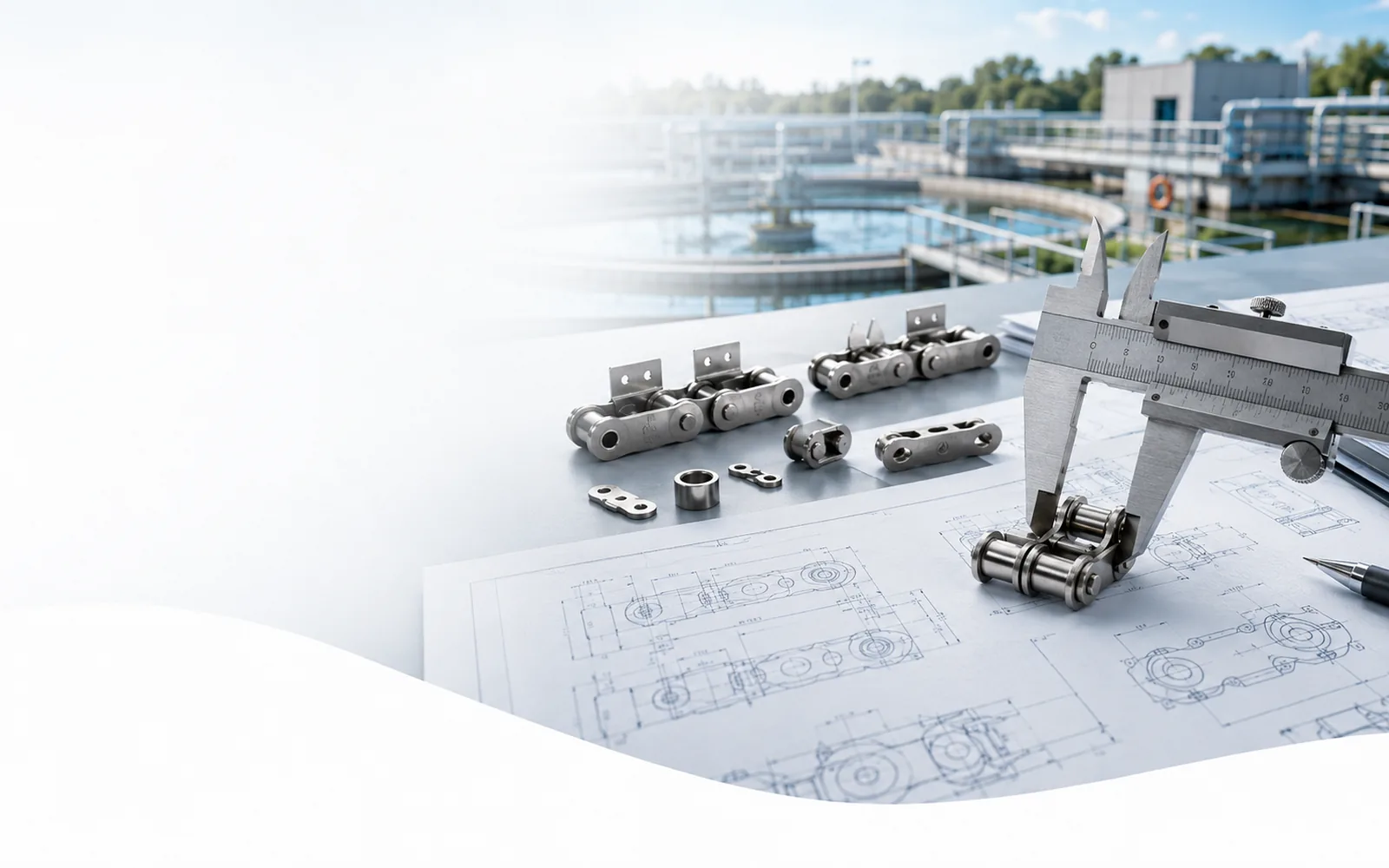
Wastewater Collector & Pintle Chains are used in collector mechanisms using pintle-chain geometry, with model choice controlled by pitch, link construction, working-load data, attachments and sprocket interface. Current model options include 720, 720S, 730, 788, MS 720S and MS 730. The correct family is the one that fits the complete mechanism: chain path, guides, attachments or flights, sprockets, take-up and the actual water/solids environment.
This family is relevant to water and wastewater collector mechanisms, including installations where 6-inch or shorter-pitch pintle chains are part of the existing drive/flight system. For replacement projects, begin with the installed dimensions and condition. For new equipment, begin with shaft centers, sprocket data, chain path, attachment spacing, process duty and the required quantity.
Do not treat pitch as proof of interchangeability. Two chains can share a nominal pitch and still differ in link profile, working width, pin or barrel geometry, attachment locations, material construction or sprocket requirements.
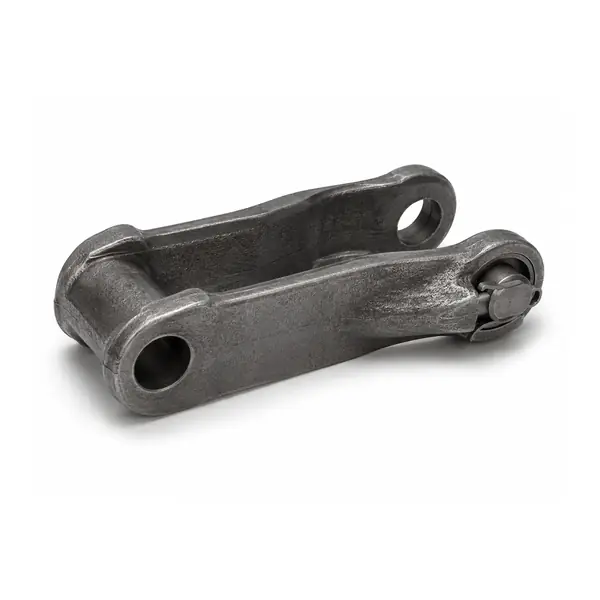
Start with geometry, then compare construction and duty
Confirm pitch over several links, working width, pin/bearing/roller dimensions, overall pin length and the link or plate envelope.
Record the attachment type, interval, hole centers, offset, fasteners and flight/rake connection. A base-chain match does not confirm the attachment.
Count teeth, record face width and alignment, and inspect guides for one-sided contact. These mating parts often decide whether a candidate can be used.
Where several models have similar names, use the dimensional table on the individual product page and a field measurement sheet. The model designation is useful for search and purchasing, but the equipment interfaces are the final check.
Match the family to the wastewater mechanism
Rectangular clarifiers and chain-and-flight collectors depend on synchronized strands and flight timing. Sludge and grit systems add wet solids and abrasion. Bar screens add debris, rake attachments and intermittent peak loads. The same chain family can behave very differently when the load path and guide arrangement change.
For an existing system, photograph the chain seated on the drive and take-up sprockets before removal. Add one representative attachment station, the take-up position and any guide surface with concentrated polishing or damage. These observations help distinguish a chain-identification issue from a machine-alignment or wear problem.
If the plant contains several collector trains, label measurements by equipment and strand. Keeping left/right or drive/return references separate prevents one worn section from being used as the nominal definition for the entire project.

Information to confirm before choosing a model
- pitch and complete link geometry
- listed working-load data for the model
- riveted or cottered construction as required
- attachment family and repeat interval
- sprocket face, tooth engagement and guide clearance
- total chain length or number of pitches and strand count
- take-up travel and existing sprocket wear
- drawings, samples and photographs tied to the same equipment
- quantity, samples and any required inspection documentation
When material grade or formulation is not fixed in the published technical specification, include the requirement in the RFQ rather than assuming it from the family name. The same applies to special attachment drilling, joining components and project-specific inspection.
Check the chain and mating components together
A worn chain can elongate and articulate differently from a new chain, while the sprocket can wear to the old pitch relationship. Inspect tooth hooking or asymmetry, shaft alignment and face contact before deciding that sprockets can be reused.
Guide clearance should be checked at the widest chain and attachment features, including pin heads and offset brackets. On paired strands, compare spacing and flight squareness through the circuit; a correct chain dimension will not compensate for misaligned shafts or guides.
Use the replacement measurement guide when the installed chain is unknown, and the application pages when process duty is the main uncertainty.
Build a repeatable record for the order and the next shutdown
| Record | Include |
|---|---|
| Chain identification | Model if known, drawing revision, pitch, widths, pin/bearing/roller dimensions and joining construction |
| Attachments | Type, repeat interval, hole pattern, offset, fasteners and process-element connection |
| Mating parts | Sprocket tooth count/face/bore, guide clearance, shaft alignment and take-up range |
| Duty | Equipment type, submerged/exposed zones, solids/grit, chemistry, temperature and known jams or shock events |
| Commercial scope | Length or pitches, strands, quantity, sample need and inspection/document requirements |
After installation, keep the approved drawing, final chain length, take-up position and representative photographs with the maintenance record. A repeatable baseline lets the next shutdown focus on change—elongation trend, attachment condition, guide contact and sprocket wear—rather than starting the identification process again.
Questions about Wastewater Collector & Pintle Chains
Can I select a model by pitch alone?
No. Use pitch as the first filter, then compare working width, link/pin geometry, attachments, sprockets, guides and operating environment.
Can I change from another chain material without changing the machine?
Only after geometry, load, sprocket and guide compatibility, temperature and chemical/abrasive exposure are checked. Treat a material-family change as an engineering review.
What should I send for a worn or unknown chain?
Send a multi-pitch measurement, working width, pin/bearing dimensions, attachment details, sprocket information, photographs and a sample when practical.
Should sprockets be replaced automatically?
Not automatically. Inspect tooth profile, alignment and the amount of old-chain elongation. Replace or rework mating components when their condition would prevent correct engagement with the new chain.
Can several models be quoted together?
Yes. Separate each line by equipment/model/drawing and quantity so dimensions and attachments cannot be mixed between items.