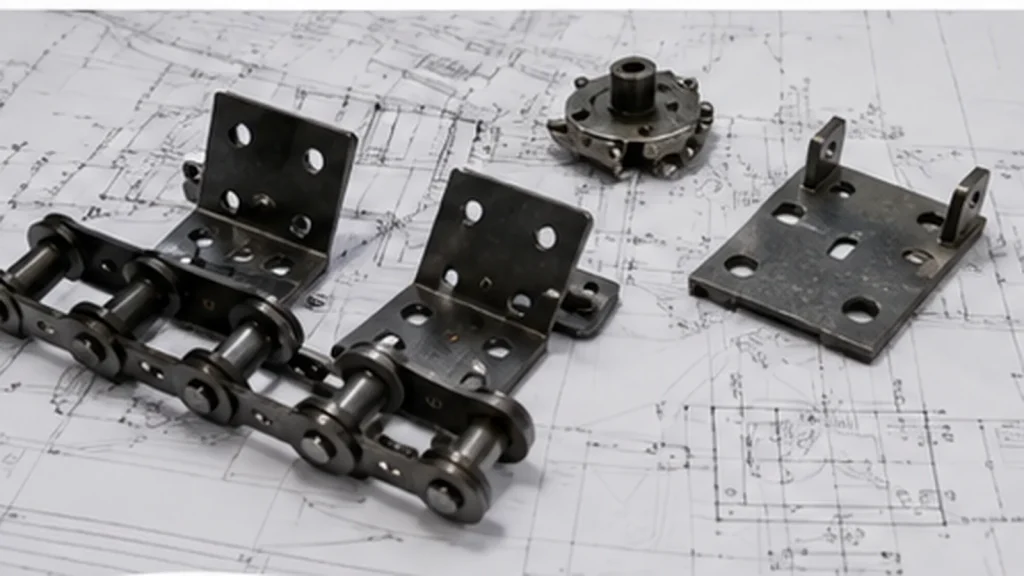
Custom Wastewater Chain Engineering Questions
Define a custom chain around fixed equipment interfaces, duty and inspection requirements rather than a vague model description.
Read guide →

Use these guides to identify an existing chain, compare construction options, inspect a collector system, plan a shutdown or prepare a technically complete RFQ. The articles are organized around the questions maintenance, engineering and procurement teams face during real replacement work.
Use the selection guides when the mechanism is known but the chain family or construction is still open.
Use the measurement guides when a worn sample or an unknown model must be reconstructed.
Use the wear and troubleshooting guides when the reason for replacement is not yet clear.
For model-specific dimensions, go to the product families. For field measurement and attachment questions, use the engineering guides.
A maintenance symptom such as pitch growth, one-sided wear or repeated attachment damage should trigger a system check before a new model is selected. The useful sequence is to identify the symptom, locate it in the chain circuit, measure the affected interfaces and then compare product options.
If the decision is commercial rather than diagnostic, collect the drawing, quantity, attachment schedule and sprocket scope first. That keeps quotations comparable and reduces the chance that one offer includes only bare chain while another includes attachments or mating parts.
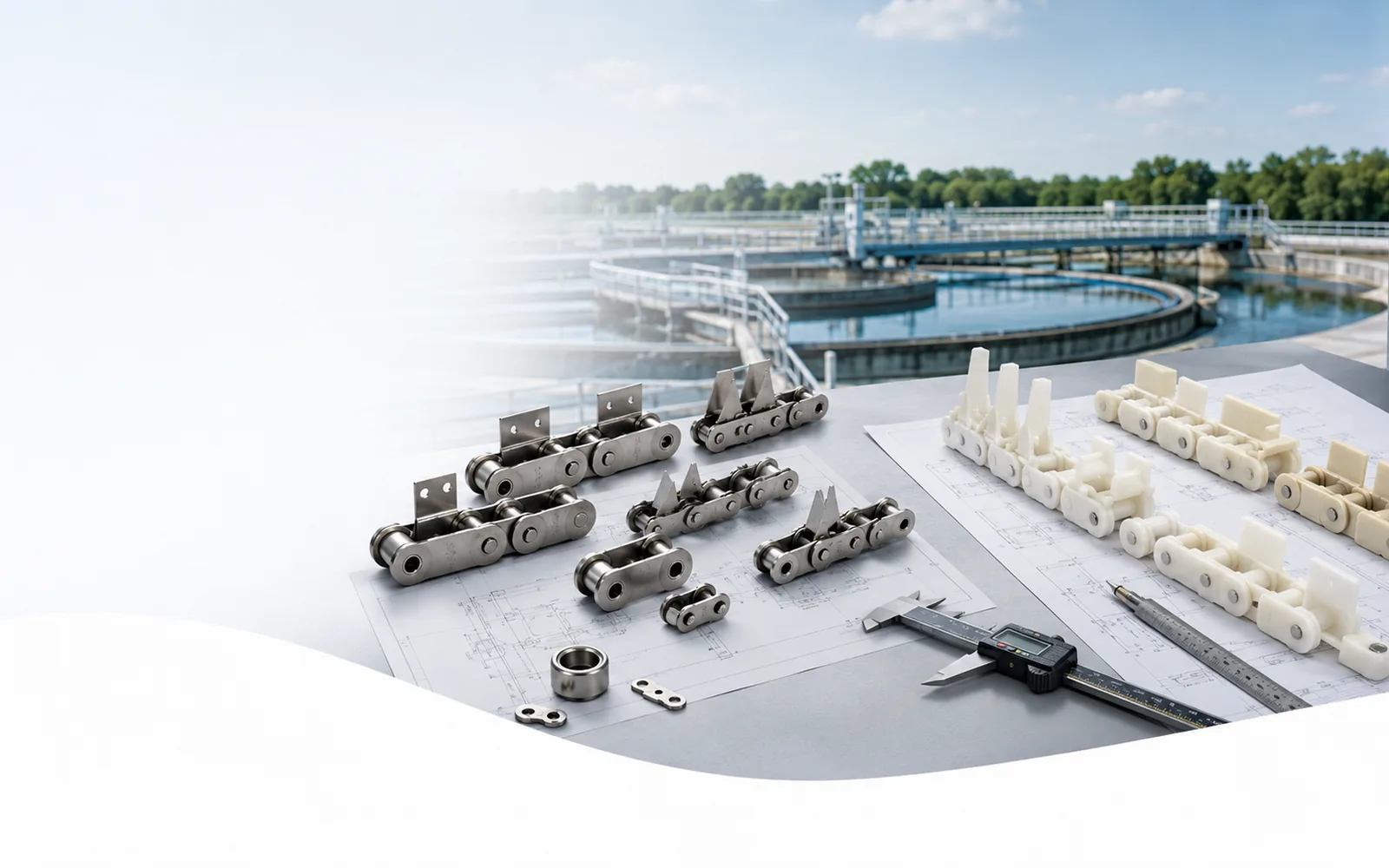
Start with multi-pitch measurement, working width, pin or bearing geometry, attachment layout and the mating sprocket. Use the replacement-measurement guides before requesting an equivalent by appearance.
Use inspection, corrosion, abrasion, sprocket-wear and uneven-elongation guides to locate the mechanism before changing material or chain strength.
Use selection, chain-and-flight, attachment and custom-RFQ guides to define the machine interfaces, duty and production drawing before comparing quotations.
| Situation | Record first | Then review |
|---|---|---|
| Replacement during shutdown | Take-up position, chain on sprockets, guide contact, attachments and a multi-pitch span | Measurement, sprocket and shutdown-checklist guides. |
| Repeated premature wear | Wear location, left/right difference, debris path, alignment and tooth condition | Failure-mode, corrosion/abrasion and alignment guides. |
| Material-family change | Fixed geometry, chemistry, solids, temperature, load and mating materials | Stainless-vs-nonmetallic and material-selection guides. |
| Custom project | Base-chain geometry, attachments, process element, sprockets, quantity and documents | Custom-engineering and RFQ-data guides. |
A technical guide is most useful when its checks become part of the equipment record. Mark the measurement stations, store the approved drawing revision and keep photographs of sprocket engagement, a typical attachment and the take-up setting.
At the next shutdown, repeat the same observations rather than collecting a different set of convenient measurements. Changes in multi-pitch length, guide contact, attachment condition and tooth wear can then be compared as trends instead of isolated snapshots.
For product-specific dimensions, use the individual product page together with the engineering guide. The guide explains how to collect evidence; the product page contains the model values that can be compared with that evidence.
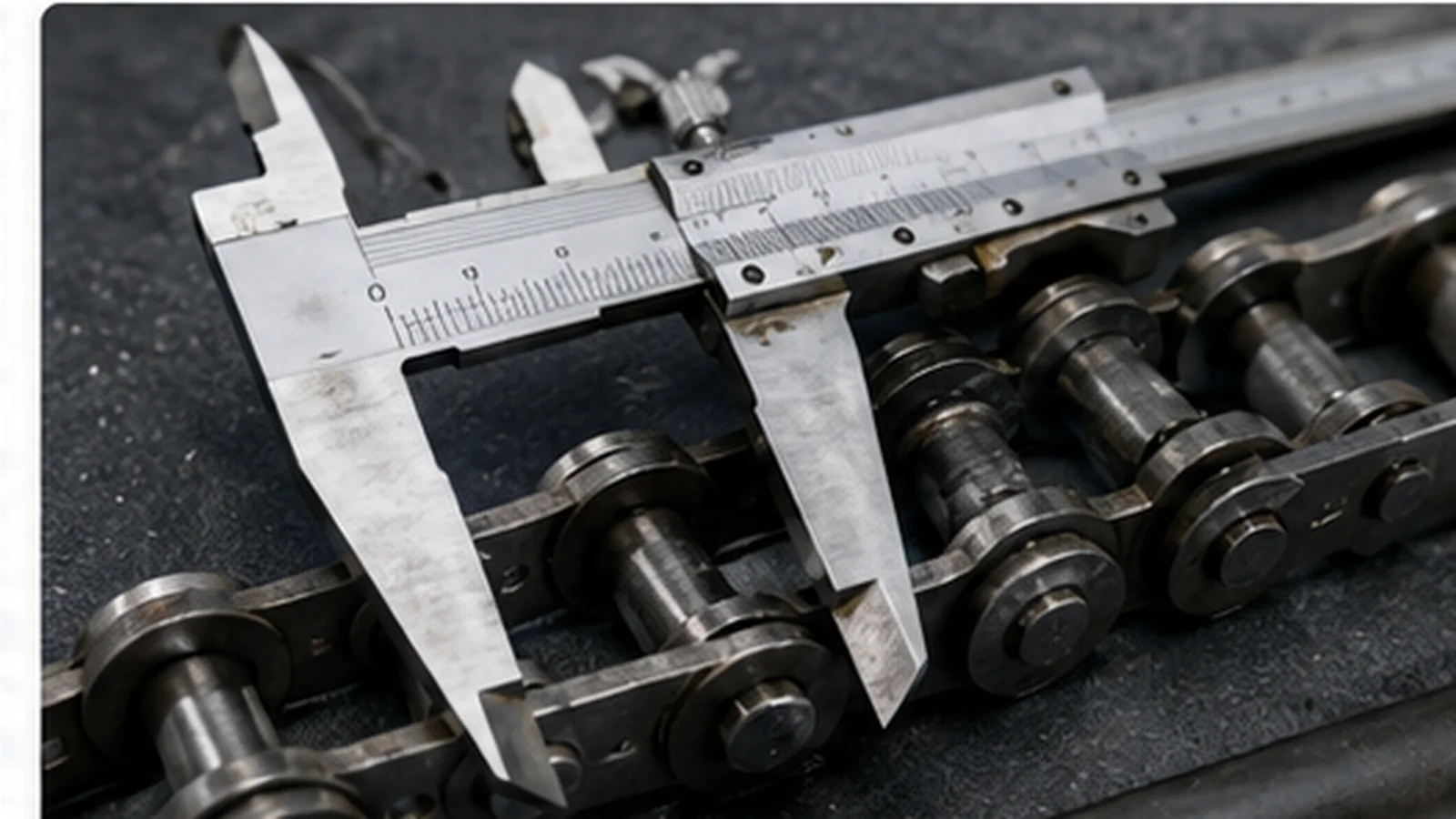
Define a custom chain around fixed equipment interfaces, duty and inspection requirements rather than a vague model description. Decide whether the sprockets can accept a new chain or should be renewed as part of the same shutdown. Classify the failure by load path and wear pattern before choosing a stronger or different-material chain. Install the chain without forcing misalignment, losing attachment timing or consuming take-up reserve unnecessarily. Turn a worn sample and existing drawing into one controlled replacement definition. Find why one strand or one section elongates faster before installing another chain into the same load imbalance.Latest technical guidesSelection, maintenance and wastewater chain engineering
Custom Wastewater Chain Engineering Questions
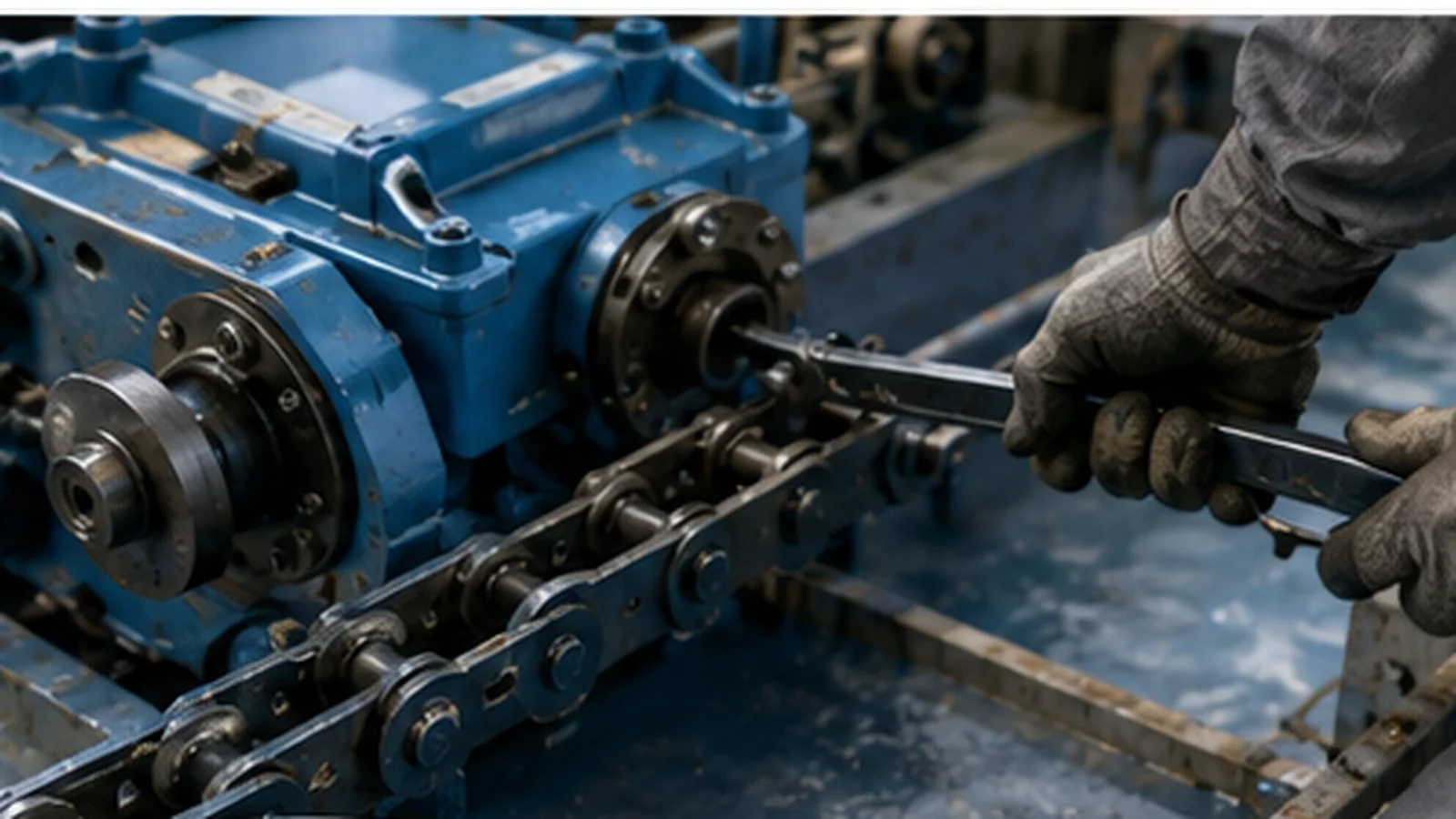
Should You Replace Wastewater Chain and Sprockets Together?
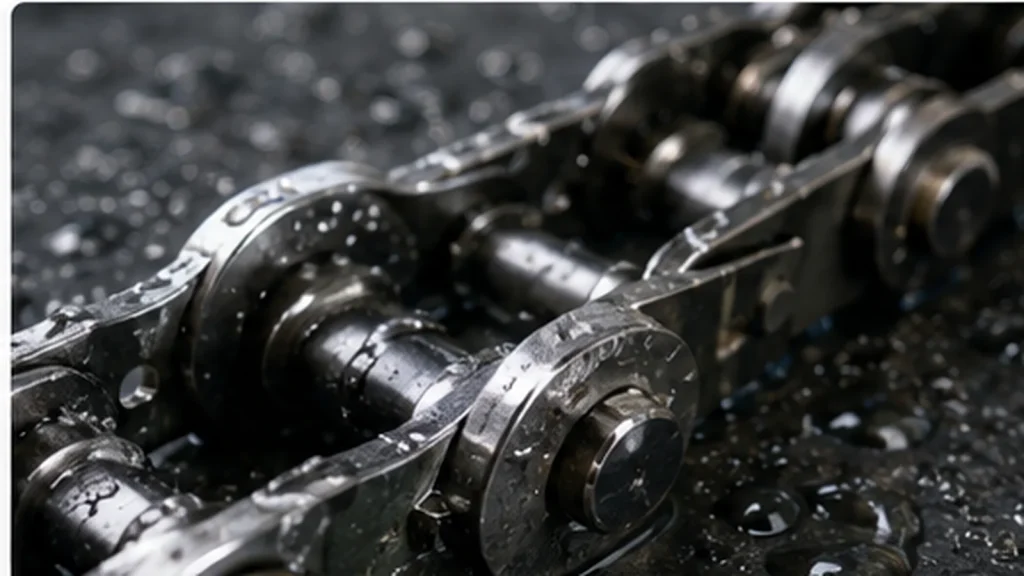
Failure Modes in Corrosive Wastewater Service
Wastewater Chain Installation Checklist
How to Prepare a Chain Sample and Drawing for Replacement
Troubleshooting Uneven Chain Elongation