
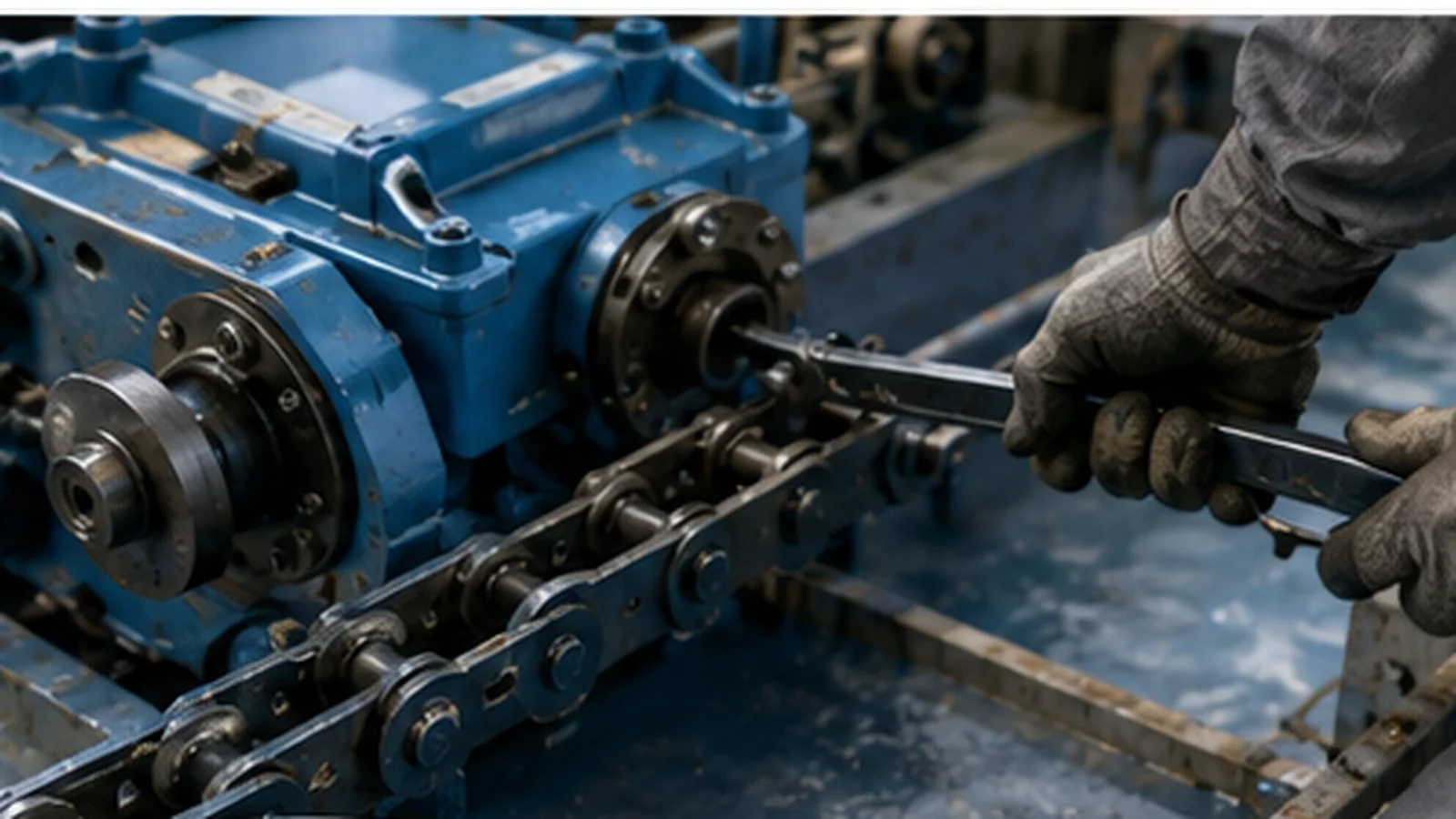
Decide whether the sprockets can accept a new chain or should be renewed as part of the same shutdown.
The decision to replace sprockets is strongest when based on tooth profile, chain elongation and alignment together. A sprocket with modest polish may remain serviceable; a hooked or asymmetrically worn profile can be a poor partner for a new chain even if no tooth is broken.
Hold geometry and duty constant
Define the scope before measuring: decide whether the sprockets can accept a new chain or should be renewed as part of the same shutdown. List which interfaces tied to Chain elongation and Tooth hooking/profile will remain in service, and which components can change during the work. That boundary keeps a change to Chain elongation from creating a new mismatch at Take-up reserve.
Start by recording chain elongation and tooth hooking/profile. Record Chain elongation and Tooth hooking/profile while the chain is still in the machine whenever access permits. Use photographs to show orientation, but pair them with dimensions or marked references for Chain elongation and Tooth hooking/profile.
If equipment being reviewed for replacement scope has been repaired previously, assume the current mechanism may differ from an old drawing until chain elongation, tooth hooking/profile and the other critical interfaces are checked.
Compare the mechanisms that matter
Trace how load enters the chain and leaves it. Relate alignment and shaft condition to take-up reserve and note how both affect load transfer, articulation or fit through the machine path. Relate the observed wear pattern to Alignment and shaft condition and Take-up reserve so the measurement has a mechanical explanation.
Map the working run, return run, drive, take-up and guide locations, then mark where Alignment and shaft condition enters the load path. Mark where alignment and shaft condition changes, where wear is concentrated and where a flight, rake or attachment transfers load. This map helps explain why two chains with similar listed dimensions can behave differently around Take-up reserve.
On paired-strand equipment, compare both sides at matched stations and note any difference in Chain elongation or Take-up reserve. Left-to-right differences can expose alignment, guide or load-sharing problems that are easy to miss when the replacement scope issue is evaluated one strand at a time.
Record the installed interfaces
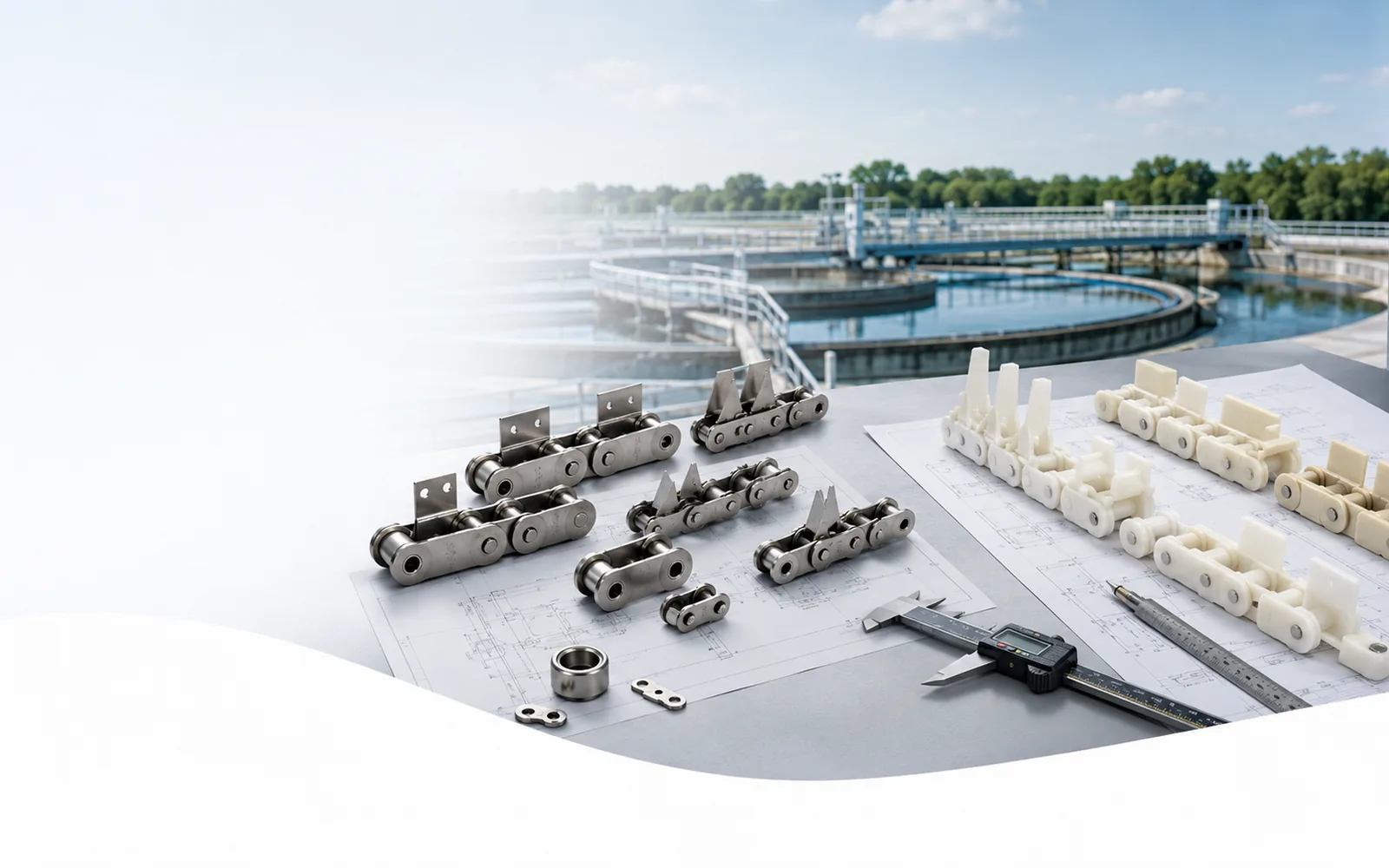
Build one field-data sheet with separate rows for chain elongation, tooth hooking/profile, alignment and shaft condition, take-up reserve and shutdown scope and spares. For values related to Chain elongation, Tooth hooking/profile or Alignment and shaft condition, state the measurement reference and whether it came from the installed chain, a removed sample or an approved drawing.
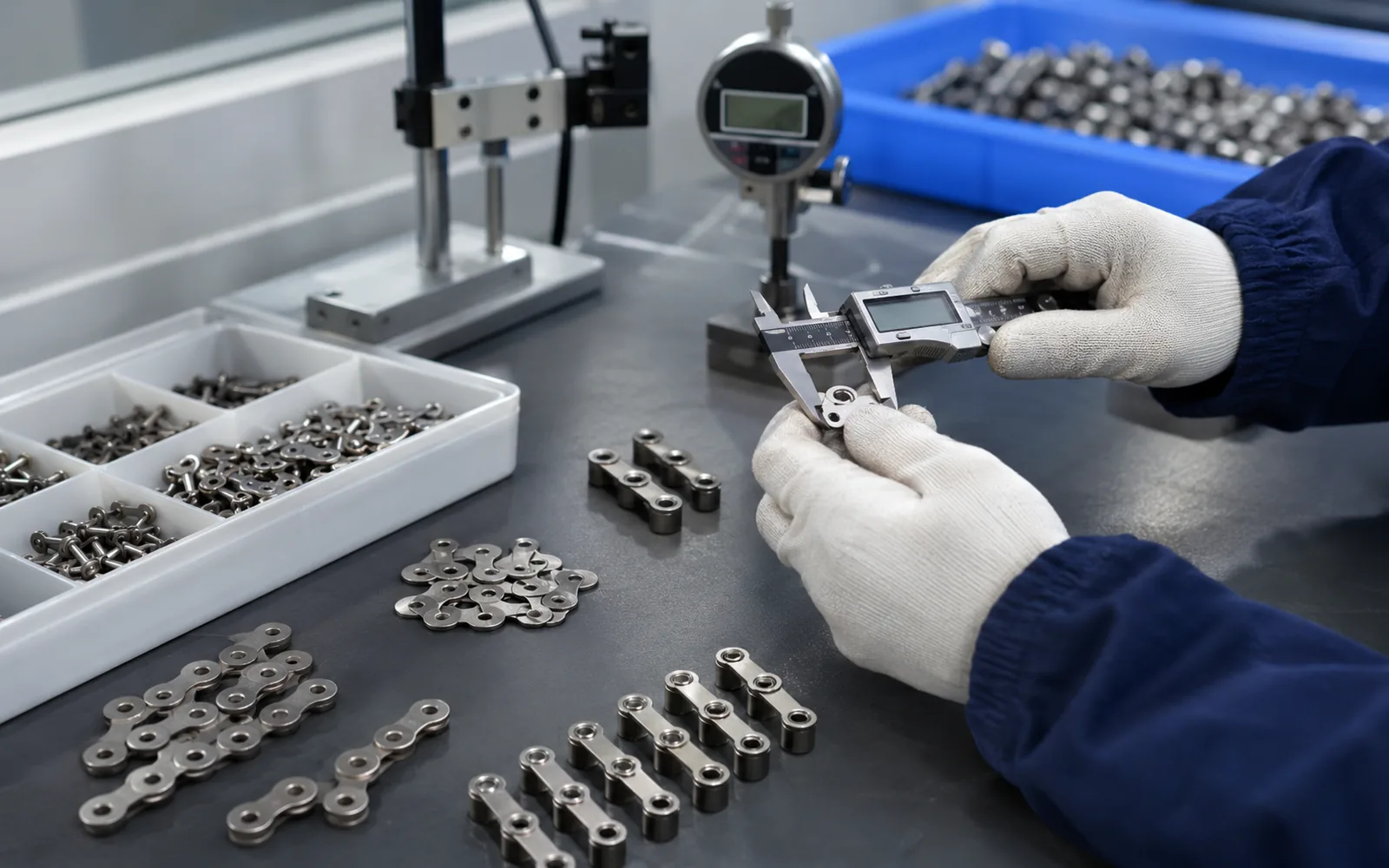
If wear affects Tooth hooking/profile or Alignment and shaft condition, repeat dimensions at several positions and use a longer multi-pitch span for chain length whenever practical. One joint can be damaged locally; during the review, the multi-pitch value should be kept separate from local joint-wear measurements.
Before adjustment or disassembly, capture take-up position, strand timing and visible contact around Take-up reserve. Adjusting the mechanism first can erase evidence needed to interpret Shutdown scope and spares.
| Field item | What to capture | How it is used |
|---|---|---|
| Chain elongation | Dimension or condition with reference points | Primary geometry or condition check |
| Tooth hooking/profile | Repeat at more than one location when worn | Cross-check configuration and wear |
| Alignment and shaft condition | Photograph and measure the mating interface | Confirm load transfer or attachment fit |
| Take-up reserve | Record condition, alignment and whether it stays | Independent machine-interface check |
| Shutdown scope and spares | Describe environment, history or trend | Interpret duty and maintenance risk |
Build a fair comparison matrix
Candidate decisions should now be screened against the fixed interfaces. If chain elongation differs, decide whether the difference is wear, measurement uncertainty or a true configuration change. If a proposal changes Chain elongation, Tooth hooking/profile or Alignment and shaft condition, identify which mating component will remain in service and verify that the change is deliberate.
Use take-up reserve as an independent cross-check. A chain can match the listed dimensions yet still seat incorrectly if Take-up reserve is different, worn or misaligned. Use Take-up reserve as an independent fit check rather than relying on a visual match alone.
Any deliberate change to Chain elongation or Take-up reserve should be shown explicitly on the drawing or quotation. The purchaser should be able to see what changes at Chain elongation or Take-up reserve and why.
Keep chain elongation and the mating geometry visible in every comparison.
Use shutdown scope and spares to distinguish a configuration choice from a wear or maintenance problem.
Define how take-up reserve and alignment and shaft condition will be checked before installation.
Review maintenance consequences
Service history helps interpret the measurements. For Shutdown scope and spares, note relevant changes in process load, solids, cleaning, blockage events, repairs or alignment, and record whether the observed condition is stable or progressing. A time trend helps distinguish an old condition at Shutdown scope and spares from an active failure mechanism.
Inspect adjacent sprocket teeth, guides, take-up hardware, attachments and fasteners while checking Take-up reserve. During replacement scope, the chain can record a problem created elsewhere in the mechanism; replacing it without correcting that cause can reproduce the same wear pattern.
Compare the loaded and return runs at equivalent stations, especially where Alignment and shaft condition transfers load. Differences can indicate whether the process load or a stationary guide is the dominant source of stress or wear.

Specify the chosen configuration
Turn the accepted decision into an RFQ that names the controlling dimensions and interfaces. Include the measured chain geometry, attachment or joining details, mating sprocket and guide information, operating conditions, total length or pitches, number of strands and required quantity. State total chain length or pitches, number of strands, joining parts, attachments and quantity.
State required material, process and inspection documents before quotation so the manufacturing and acceptance scope is clear. early definition keeps the manufacturing route, acceptance checks and commercial minimums aligned with the same scope.
When any mating interface remains uncertain, attach a marked sketch and photographs that identify the reference points. In an RFQ for replacement scope, the goal is not length; it is enough unambiguous information that different suppliers would be quoting the same geometry and scope.
- Model, drawing or sample identification
- Chain elongation
- Tooth hooking/profile
- Alignment and shaft condition
- Take-up reserve
- Shutdown scope and spares
- Total chain length or pitches, strands, joining parts and quantity
- Required material/process and inspection documents
For replacement scope measurements, use the replacement measurement guide. When the uncertainty is the chain family rather than the field dimension, compare the wastewater chain product pages.
Verify the decision at installation
After installation or corrective work, record a new baseline for chain elongation, tooth hooking/profile and take-up reserve. Add take-up position, attachment timing and representative photographs. These references make the next inspection a comparison rather than another identification exercise.
After plan work for replacement scope, move the mechanism through a complete cycle when safe and permitted. Check tight spots, tracking changes, guide contact and attachment interference at turns and sprockets, not only in an easy straight section.
Plan the first follow-up inspection around the wear, alignment or fit condition most likely to change after commissioning. A short early check can reveal installation settling or an unresolved system issue before it develops into substantial chain or sprocket damage.
Avoid misleading material comparisons
A common mistake is to let one convenient number dominate the decision. Compare the primary measurement with mating interfaces, wear pattern and machine condition before accepting a replacement. This avoids false equivalents that fit a table but not the machine.
Do not treat every visible surface change as a material problem. Alignment, abrasive solids, trapped debris, seized articulation and sprocket wear can produce symptoms that look like a chain-material problem until the load path relevant to replacement scope is inspected.
A practical acceptance test is straightforward: another engineer or maintenance technician should be able to repeat the checks for Chain elongation, Tooth hooking/profile and Take-up reserve from the record alone.
Records to retain after commissioning
Record the accepted value or condition for chain elongation with a reference that can be repeated.
Keep a photograph or drawing detail showing how alignment and shaft condition relates to the installed mechanism.
Note the service condition or trend for shutdown scope and spares so the next inspection has context.
Store the approved drawing revision, purchase line, joining method and commissioning notes together. If a field adjustment was necessary, record it rather than allowing the machine to drift away from the drawing without explanation. That small discipline makes later plan decisions faster and reduces uncertainty in repeat orders.
Field observations that change the decision
Mark travel direction, drive and take-up locations, and the station where alignment and shaft condition transfers load. Number the inspection points so photographs and dimensions refer to the same physical locations.
For chain elongation and tooth hooking/profile, record exactly where the measurement starts and ends. Repeat worn features away from the most damaged location before an agreed nominal value is placed on a drawing.
If take-up reserve remains in service, its condition is part of the replacement specification. If it is renewed, state the new mating geometry so the chain and component can be checked as one interface.
| Record | Minimum useful detail | Reason |
|---|---|---|
| Machine map | Working/return runs, drive, take-up, guides and process-element locations | Keeps chain measurements connected to the mechanism. |
| Chain elongation | Measured value, reference points, location and whether the part is worn | Separates field condition from the intended nominal geometry. |
| Alignment and shaft condition | Drawing/photo of attachment or process-element connection and load direction | Confirms how the process load enters the chain. |
| Take-up reserve | Condition, alignment, dimensions and whether it will remain in service | Provides an independent fit and engagement check. |
| Shutdown scope and spares | Specific environment, event history and trend rather than a generic duty label | Helps interpret why wear or damage developed. |
Operating information about shutdown scope and spares should be specific enough to change an engineering decision. State where the chain is submerged, what solids or debris are present, whether chemical cleaning occurs, and whether jams, shock events or restricted maintenance access influence the duty. Broad labels such as “wastewater service” are useful context but do not replace these machine details.
During quotation review, compare the same fields across proposals: chain elongation, tooth hooking/profile, alignment and shaft condition, take-up reserve, material/process requirements, joining construction, inspection documents and commercial quantity. If one proposal intentionally changes a fixed interface, that change should be visible on the drawing or quotation rather than hidden inside a similar model description.
At commissioning, record what actually went into the machine. Keep the purchase drawing, final chain length, joining parts, take-up setting and representative photographs together. For later plan work, that baseline lets the maintenance team measure change instead of rebuilding the specification from a worn component.
For replacement scope, a different technician should be able to revisit chain elongation, alignment and shaft condition and the same inspection locations at the next shutdown. Consistent references are what turn one inspection into a useful condition trend.
Turn observations into a repeatable check
Before approving a replacement, adjustment or quotation related to should you replace wastewater chain and sprockets together?, tie every important observation to a physical reference point. The purpose is not to collect more data than necessary; it is to make the critical geometry, condition and operating evidence repeatable by another engineer or maintenance technician.
| Check | What to record |
|---|---|
| Chain elongation | Record a specific value or condition, the reference used, and enough context for a second technician to repeat the check. |
| Tooth hooking/profile | Record condition, alignment or position, relevant dimensions and whether the mating component will remain in service. |
| Alignment and shaft condition | Record the measured value, exact reference points, machine location and whether wear may have changed the apparent nominal dimension. |
| Take-up reserve | Record condition, alignment or position, relevant dimensions and whether the mating component will remain in service. |
| Shutdown scope and spares | Record a specific value or condition, the reference used, and enough context for a second technician to repeat the check. |
Keep the marked drawing, photographs and measured values together. If a dimension is taken from a worn component, label it as a field condition rather than silently treating it as the new nominal value. This distinction is especially important when a supplier must reproduce an interface that remains in the machine.
Frequently asked questions
What is the first check for should you replace wastewater chain and sprockets together??
Start with chain elongation and the fixed machine interfaces. Then compare tooth hooking/profile, alignment and shaft condition and the mating sprocket/guide condition.
Can the model number be used without field checks?
For a controlled repeat order related to replacement scope, the model can be a starting point. On old, repaired or modified equipment, verify chain elongation, tooth hooking/profile and the interfaces that must remain in service.
How should a worn sample be measured?
For replacement scope, use a multi-pitch measurement for accumulated length, repeat tooth hooking/profile and other local dimensions at several positions, and keep worn values separate from the agreed nominal drawing.
What photographs are most useful?
Photograph the chain seated on the sprocket or interface associated with take-up reserve, plus a representative alignment and shaft condition location, the take-up, guide contact and any localized damage. Add a scale reference where dimensions are not obvious.
What belongs in the RFQ?
Include the chain/model or sample, chain elongation, tooth hooking/profile, alignment and shaft condition, take-up reserve, operating conditions, total length/strands and quantity.
When should sprockets be included in the replacement scope?
For replacement scope, evaluate sprockets whenever take-up reserve, tooth wear, alignment or chain elongation suggests the old tooth profile may not seat correctly with the new chain. Base the decision on condition, not an automatic rule.
For replacement scope, send the chain or drawing, chain elongation, alignment and shaft condition, sprocket/interface details, machine duty and quantity. The RFQ can then be reviewed against the actual wastewater mechanism.