

What the equipment requires from the chain
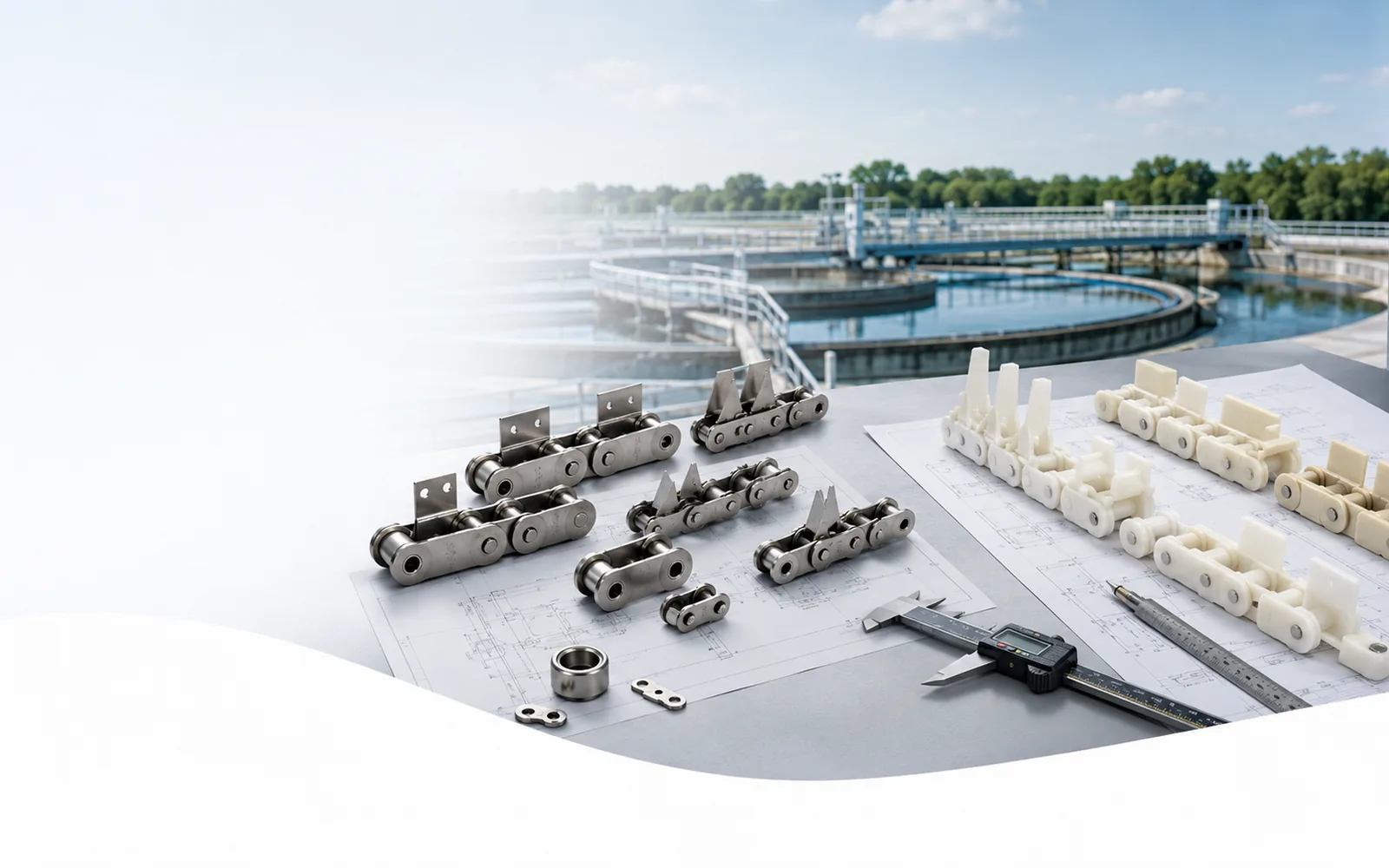
Bar-screen chains carry rakes or cleaning elements through debris-laden wastewater and around drive and return sprockets. Attachment security, tracking, frame clearance and peak debris loads deserve the same attention as nominal chain strength.
Review rake attachment geometry and debris and shock loading before treating a model number as a direct replacement.
Check chain tracking through the frame together with drive and return sprocket engagement so the chain is evaluated inside the actual mechanism.
Use clearance at guides and screening elements to decide what must be inspected or confirmed before production.
Understand screen cleaning, debris lift and rake attachment duty
The chain carries tension, but the surrounding mechanism determines how that tension becomes useful work. For bar screen chains, the critical relationships include rake attachment geometry, debris and shock loading and chain tracking through the frame. A change in one area can shift load into the guides, attachments or sprocket teeth.
Before a replacement is released, record drive and return sprocket engagement and clearance at guides and screening elements. These observations help distinguish a dimensional mismatch from a maintenance or alignment problem.

Measurements and observations to capture
| Check | Recommended field record |
|---|---|
| Rake Attachment Geometry | Measure or describe the installed condition. |
| Debris And Shock Loading | Record the operating condition and visible wear. |
| Chain Tracking Through The Frame | Confirm the mating component or interface. |
| Drive And Return Sprocket Engagement | Mark the value on the drawing or field sketch. |
| Clearance At Guides And Screening Elements | State whether the item will remain or be replaced. |
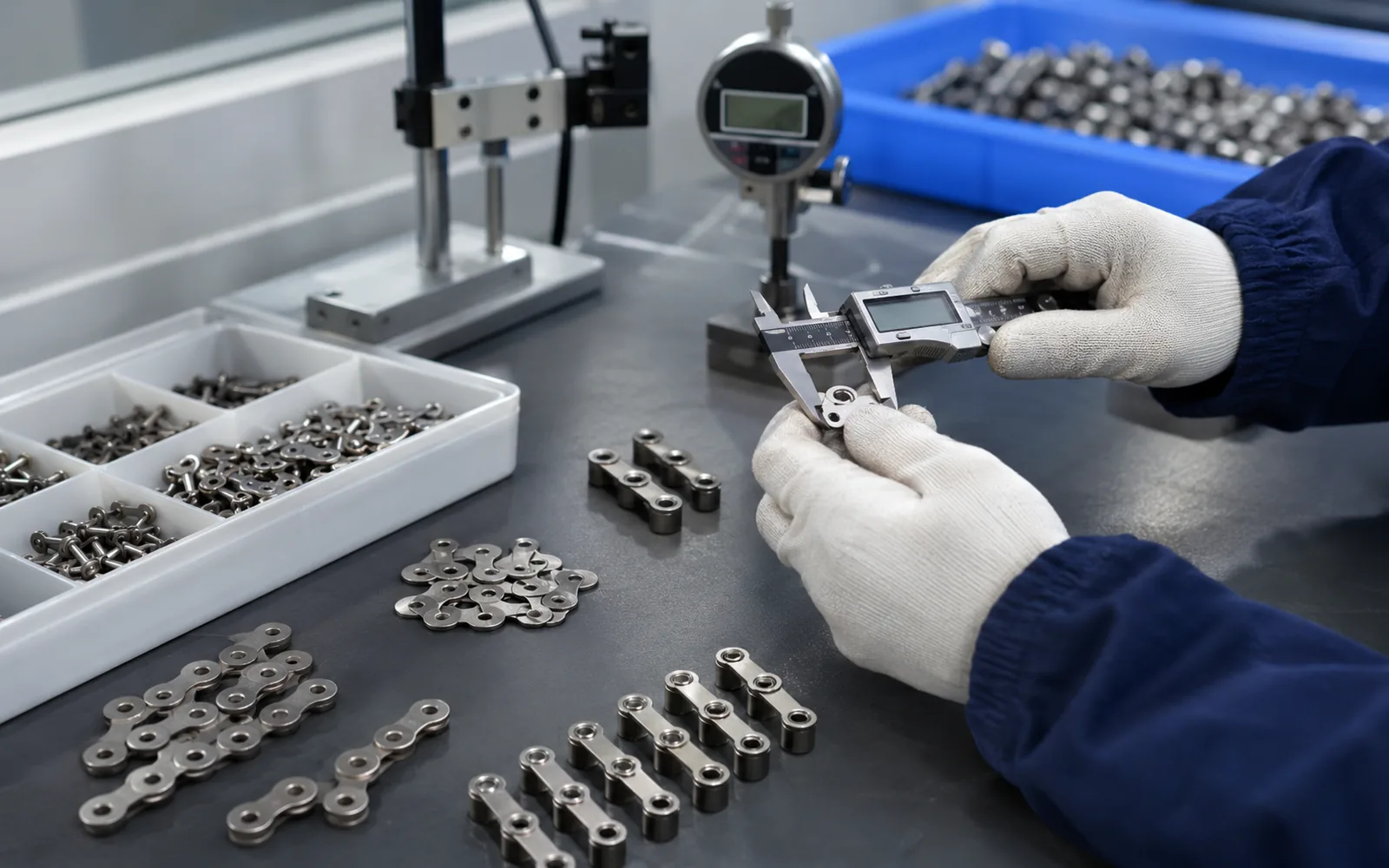
For bar screen chains, take measurements at more than one position when wear is visible. Label values taken from the installed part separately from values copied from an old drawing so the engineering team can see which dimensions still need agreement.
Check the chain together with sprockets, guides and process elements
Photograph the chain while it is still seated in the machine. Include the sprocket tooth profile, guide contact areas and one representative attachment station. For paired systems, compare both strands and note whether flights remain square through the circuit.
If chain tracking through the frame or drive and return sprocket engagement will be retained, treat it as a fixed interface. If it will be replaced, the chain and mating part can be evaluated as a matched set rather than forcing the new chain to follow worn geometry.
Questions to answer before selecting a model
- Is rake attachment geometry measured at several locations or only copied from an old record?
- Does debris and shock loading match the installed process element and both strands where applicable?
- Will chain tracking through the frame remain in service, and is its condition acceptable?
- Is drive and return sprocket engagement free from interference, one-sided wear or unexpected field changes?
- How does clearance at guides and screening elements affect inspection, material choice or shutdown planning?
- Are chain length, strand count, joining method and required quantity stated clearly?
Pitch narrows the search, but working width, bearing geometry, attachments and sprocket seating determine whether the chain can run through the machine without interference.
Check rake attachments, debris pickup and jam loads through the full cycle
A bar screen does not apply a smooth continuous conveying load. Rakes or cleaning elements meet irregular debris, pass close clearances and can experience short jam or impact events at pickup and discharge. The attachment and tracking system therefore deserves as much attention as the base chain.
| Review point | What to check | Why it matters |
|---|---|---|
| Rake attachment | Measure hole pattern, offset, orientation and fastener condition on a representative station. | The rake load often enters the chain eccentrically, so a visually similar bracket may not be equivalent. |
| Pickup/discharge zones | Observe or document where debris load begins and where it is released. | Local peak load can govern the attachment even when average chain tension is moderate. |
| Frame tracking | Check guide contact and side clearance through straight, curved and sprocket-transition zones. | A tracking error can turn a debris event into a recurring overload. |
| Jam history | Record known blockage events, overload protection and restart practice. | Repeated shock events should be considered separately from normal operating duty. |
Link the engineering decision to commissioning and maintenance
If the screen has been field-modified, verify rake spacing and frame clearances before copying an old chain drawing. A small change in attachment offset or guide position can create interference only at one part of the cycle.
After installation, run the mechanism through the complete permitted path and watch the rake at pickup, turns and discharge. Record any tight location before full-load operation so later damage is not mistaken for normal chain bedding-in.
Tie photographs, field measurements and the final drawing to the same equipment or line item. If a value is worn, estimated or still uncertain, mark the uncertainty clearly on the RFQ or drawing before quotation.
Plan checks that can be repeated after installation
For bar screen chains, record a baseline multi-pitch measurement and take-up position after installation when practical. Add photographs of the attachment and sprocket condition. A repeatable baseline makes future wear trends easier to interpret.
If an installation adjustment changes an attachment, guide or take-up setting, update the equipment record so the next replacement starts from the configuration that is actually running.
Prepare a quotation package around the machine interface
Send the model or sample, a dimensioned sketch, photographs of the chain in the mechanism, sprocket data, application conditions and the required length or quantity. State which mating parts will remain and which can change.
For related model options, browse the wastewater chain product families. If the chain cannot be identified confidently, use the replacement measurement workflow before requesting an equivalent.
Rake engagement and screen-frame verification
A bar screen chain is part of a timed rake mechanism. Replacement review should therefore include rake or flight spacing, attachment orientation, screen-frame clearances and the position at which the rake enters and leaves the bar rack. Field repairs can alter these interfaces even when the base-chain pitch remains unchanged. Record a complete attachment repeat and photograph the rake connection from both sides.
Before normal operation, hand-jog or slow-run the mechanism through one full cycle where site procedures allow. Check that each rake enters the screen without side load, clears the frame and transfers around the sprockets without binding. If one position consistently tightens the chain or shifts the rake laterally, resolve that mechanical condition before using take-up adjustment to mask it.