
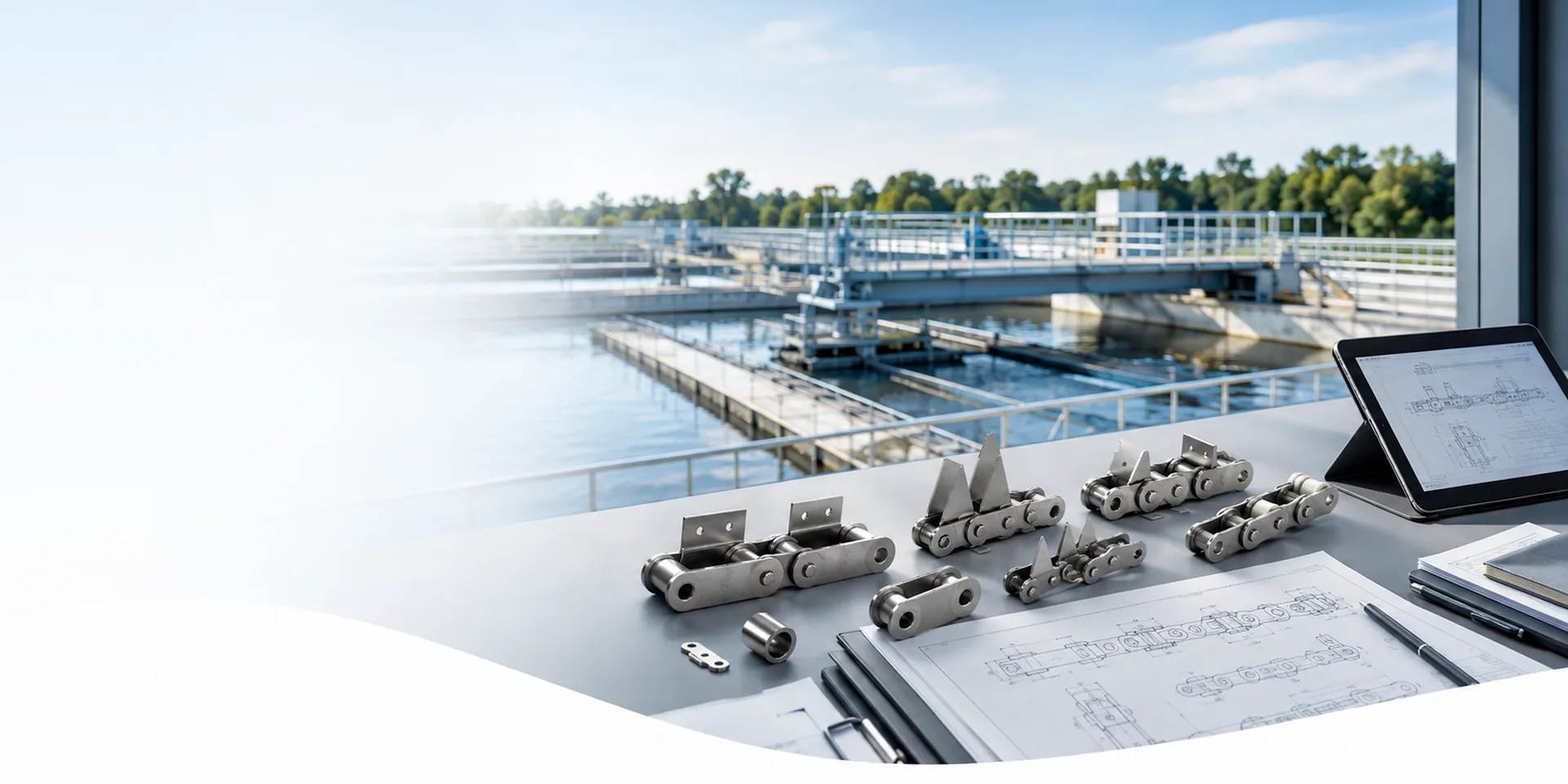
What the equipment requires from the chain
A custom wastewater-chain quotation becomes much easier to compare when the base chain, attachments, material or process requirements, inspection scope and quantity are stated in one controlled package.
Review base-chain geometry and custom attachment drawing before treating a model number as a direct replacement.
Check material and process requirements together with inspection and documentation needs so the chain is evaluated inside the actual mechanism.
Use chain length, strand count and quantity to decide what must be inspected or confirmed before production.
Understand turning a special chain requirement into production-ready RFQ data
The chain carries tension, but the surrounding mechanism determines how that tension becomes useful work. For custom chain rfq data, the critical relationships include base-chain geometry, custom attachment drawing and material and process requirements. A change in one area can shift load into the guides, attachments or sprocket teeth.
Before a replacement is released, record inspection and documentation needs and chain length, strand count and quantity. These observations help distinguish a dimensional mismatch from a maintenance or alignment problem.
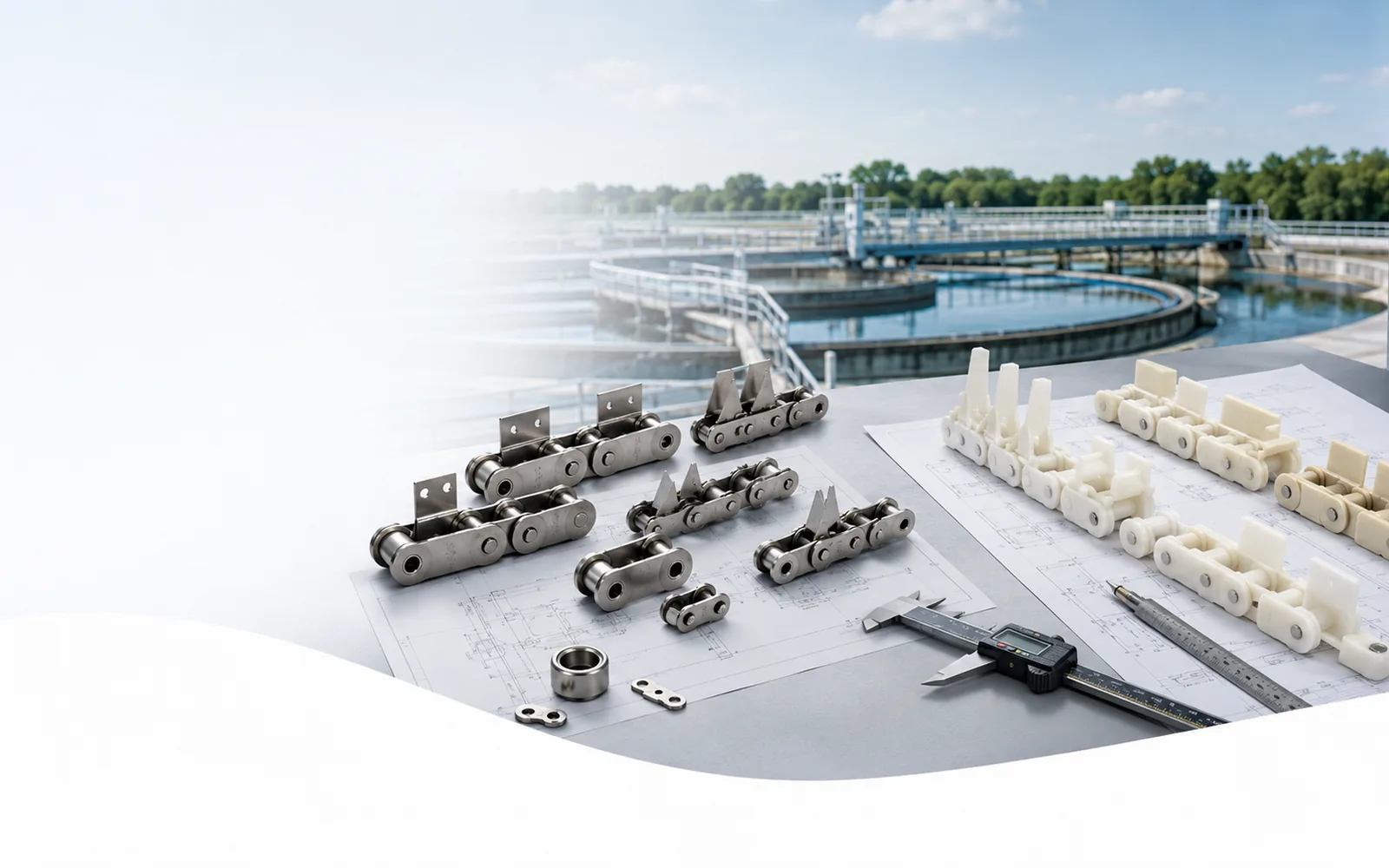
Measurements and observations to capture
| Check | Recommended field record |
|---|---|
| Base-Chain Geometry | Measure or describe the installed condition. |
| Custom Attachment Drawing | Record the operating condition and visible wear. |
| Material And Process Requirements | Confirm the mating component or interface. |
| Inspection And Documentation Needs | Mark the value on the drawing or field sketch. |
| Chain Length, Strand Count And Quantity | State whether the item will remain or be replaced. |
For custom chain rfq data, take measurements at more than one position when wear is visible. Label values taken from the installed part separately from values copied from an old drawing so the engineering team can see which dimensions still need agreement.
Check the chain together with sprockets, guides and process elements
Photograph the chain while it is still seated in the machine. Include the sprocket tooth profile, guide contact areas and one representative attachment station. For paired systems, compare both strands and note whether flights remain square through the circuit.
If material and process requirements or inspection and documentation needs will be retained, treat it as a fixed interface. If it will be replaced, the chain and mating part can be evaluated as a matched set rather than forcing the new chain to follow worn geometry.
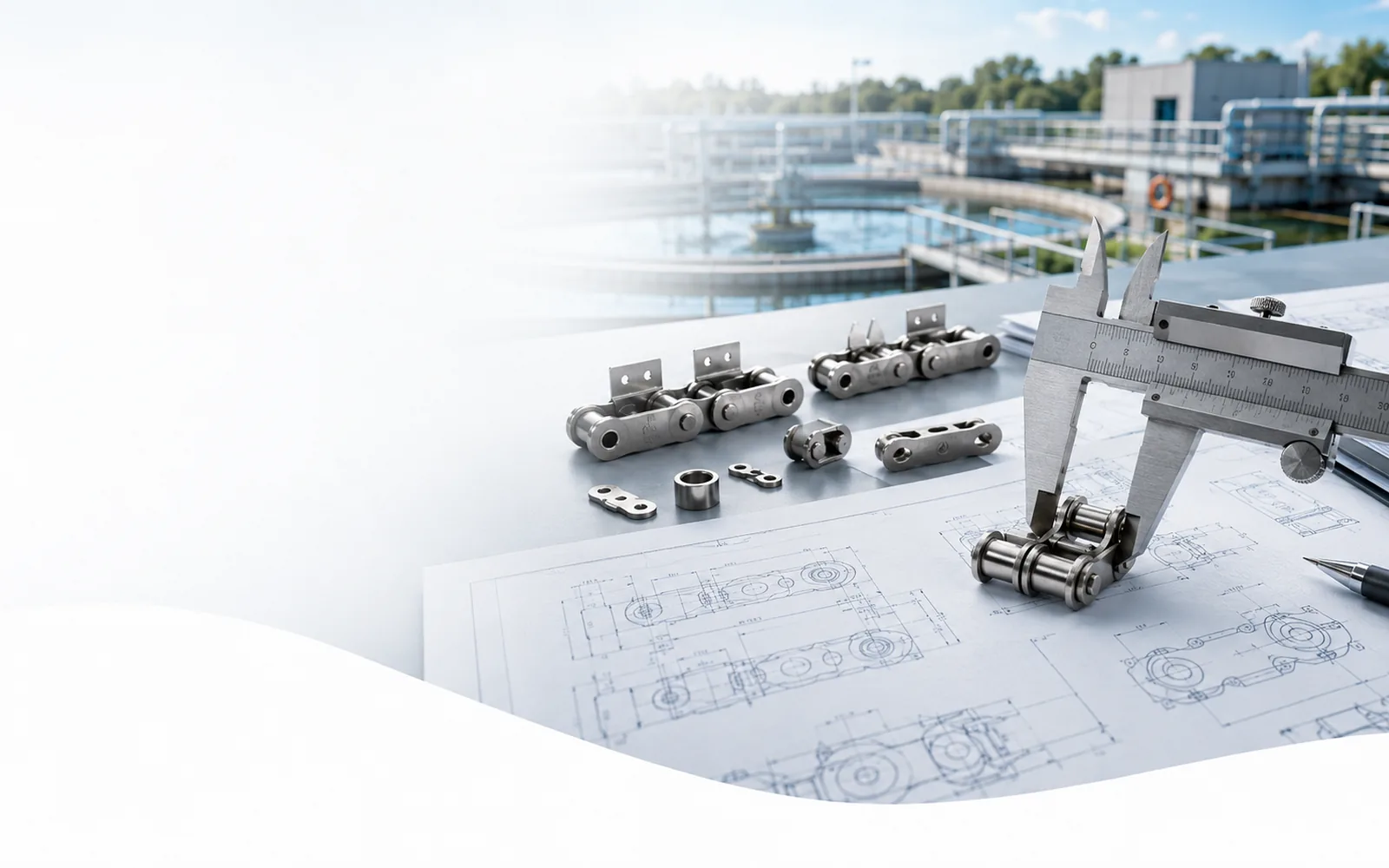
Questions to answer before selecting a model
- Is base-chain geometry measured at several locations or only copied from an old record?
- Does custom attachment drawing match the installed process element and both strands where applicable?
- Will material and process requirements remain in service, and is its condition acceptable?
- Is inspection and documentation needs free from interference, one-sided wear or unexpected field changes?
- How does chain length, strand count and quantity affect inspection, material choice or shutdown planning?
- Are chain length, strand count, joining method and required quantity stated clearly?
Pitch narrows the search, but working width, bearing geometry, attachments and sprocket seating determine whether the chain can run through the machine without interference.
Turn a custom wastewater-chain requirement into one controlled data package
Custom enquiries are easiest to quote when fixed geometry, selectable options and unresolved questions are separated. A model name or a photograph can start the conversation, but production needs dimensions, interfaces, duty, quantity and any material/process or inspection requirements tied to one revision.
| Review point | What to check | Why it matters |
|---|---|---|
| Base chain | Pitch, widths, pins/bearings/rollers, link envelope and joining construction. | Defines the repeating chain geometry and mating sprocket relationship. |
| Custom features | Attachment drawing, hole pattern, offset, repeat interval, fasteners and flight/rake connection. | Prevents custom details from being hidden inside a generic model description. |
| Material/process | Exact grade/formulation when required, heat/surface process if applicable, and documentation needs. | Lets manufacturing route and process minimums be assessed before quotation. |
| Commercial scope | Length/pitches, strands, joining/spare pieces, quantity, sample request and delivery split. | Makes quotations comparable and prevents quantity assumptions from changing the technical offer. |
Link the engineering decision to commissioning and maintenance
When a drawing and a removed sample disagree, mark the conflicting values and identify which installed components will remain. Do not let the supplier silently choose the convenient dimension; one agreed drawing revision should control production and incoming inspection.
For repeat orders, keep the approved drawing, inspection requirements and any commissioning changes with the purchasing record. If the machine is later modified, revise the controlled data rather than relying on the old model designation.
Tie photographs, field measurements and the final drawing to the same equipment or line item. If a value is worn, estimated or still uncertain, mark the uncertainty clearly on the RFQ or drawing before quotation.
Plan checks that can be repeated after installation
For custom chain rfq data, record a baseline multi-pitch measurement and take-up position after installation when practical. Add photographs of the attachment and sprocket condition. A repeatable baseline makes future wear trends easier to interpret.
If an installation adjustment changes an attachment, guide or take-up setting, update the equipment record so the next replacement starts from the configuration that is actually running.
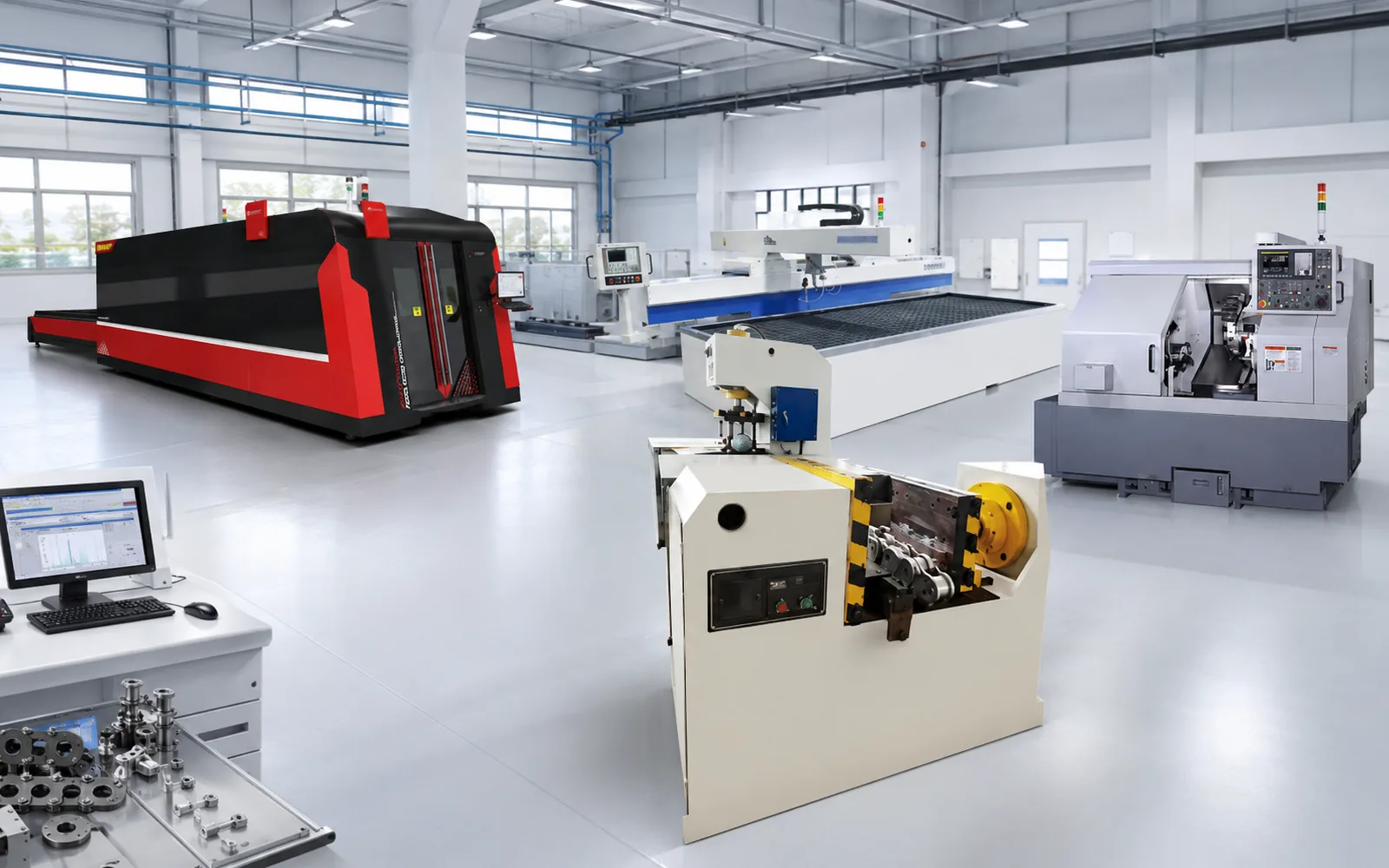
Prepare a quotation package around the machine interface
Send the model or sample, a dimensioned sketch, photographs of the chain in the mechanism, sprocket data, application conditions and the required length or quantity. State which mating parts will remain and which can change.
For related model options, browse the wastewater chain product families. If the chain cannot be identified confidently, use the replacement measurement workflow before requesting an equivalent.
Define the acceptance record before production
A custom-chain RFQ becomes much easier to control when the acceptance data is agreed before production. Identify the controlling drawing, critical dimensions, attachment repeat, joining method and any inspection records needed with the shipment. Where a removed sample is being used, state which features must match the sample and which dimensions are controlled by the drawing or machine measurement.
For repeatability, give each revised attachment or special link a clear revision reference. If the project includes multiple models, keep separate line items and quantities while identifying common material or process requirements. This reduces ambiguity in production and makes later spare orders easier to reproduce from the approved record instead of another worn field sample.